Asphalt repair and pavement rehabilitation require more than simply removing damaged material. Contractors need accurate cutting depth, consistent milling performance and enough maneuverability to work around curbs, utility trenches, road edges and other difficult areas. A hydraulic cold planer attachment for a skid steer can provide a practical solution by turning a compact loader into a precision pavement milling machine.
For contractors working on road maintenance, parking lots, utility repairs, pavement rehabilitation and surface preparation, choosing the right skid steer cold planer can improve jobsite efficiency while reducing the need for larger, less maneuverable milling equipment.
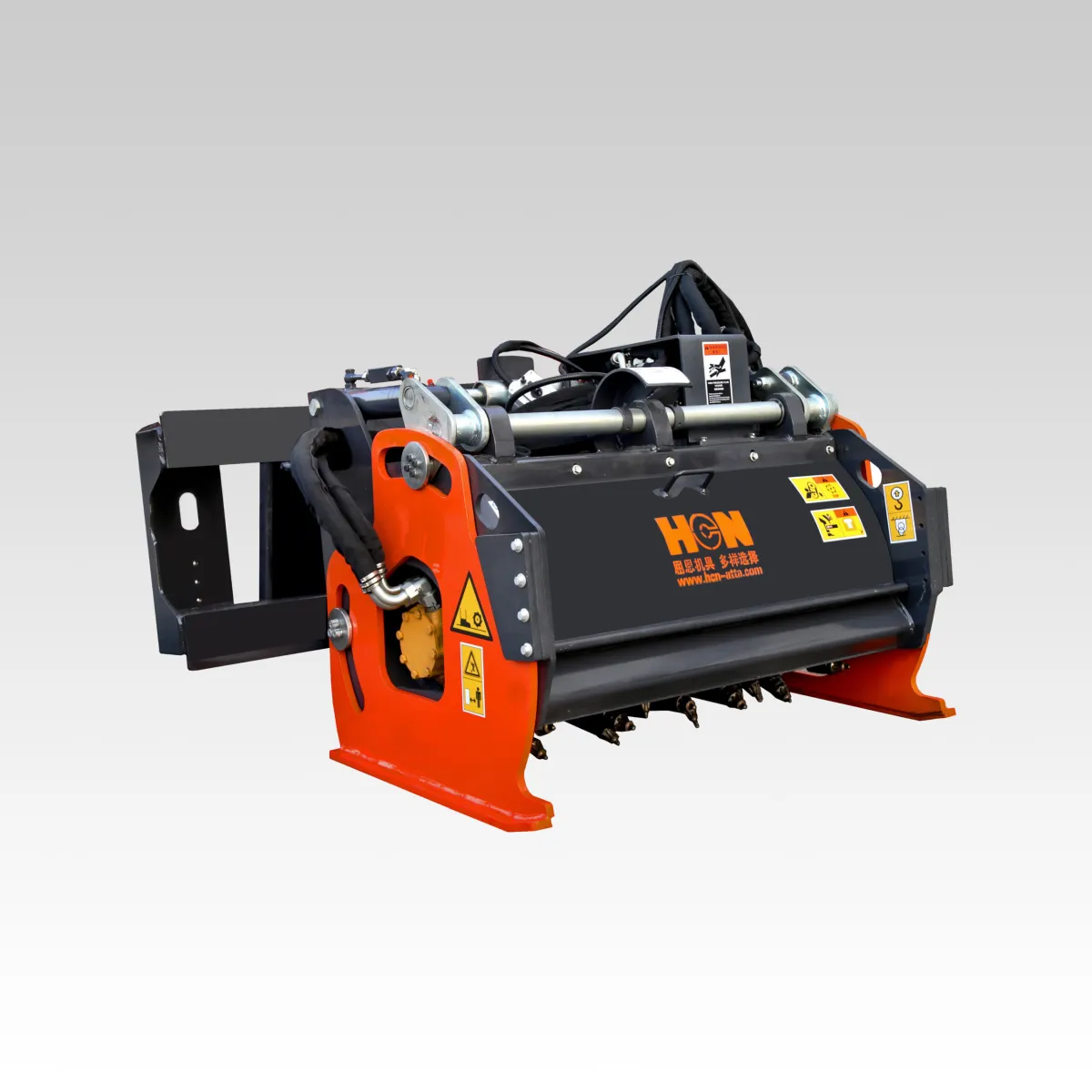
HCN’s 0206 series is designed for asphalt and concrete milling applications where controlled material removal, hydraulic power and compact equipment maneuverability are important. With multiple working widths, adjustable milling depth, lateral movement and optional water spray capability, the cold planer can be configured for a wide range of pavement maintenance and construction tasks.
What Is a Skid Steer Cold Planer?
A skid steer cold planer is a hydraulic attachment designed to remove asphalt, concrete and other hard pavement materials using a rotating milling drum equipped with cutting teeth. Unlike traditional demolition methods, cold milling allows operators to remove a controlled layer of pavement instead of breaking up an entire area.
This makes a cold planer attachment particularly useful when a project requires accurate surface removal before resurfacing, patching, trench restoration or pavement reconstruction.
Because the attachment is mounted directly to a skid steer or compact loader, contractors can use the same carrier machine for multiple jobs simply by changing attachments. This flexibility makes cold planers attractive for construction contractors, road maintenance crews, utility contractors and municipal maintenance operations.
Why Use a Cold Planer for Asphalt Milling?
Asphalt milling is often required when damaged pavement needs to be removed before a new surface is installed. If too much material is removed, additional repair work may be required. If too little is removed, damaged pavement can remain underneath the new surface.
A properly configured skid steer asphalt planer provides controlled cutting performance that helps operators remove the required pavement layer more accurately.
Cold planers are commonly used for:
- Asphalt surface removal
- Pothole and damaged pavement repair
- Road resurfacing preparation
- Utility trench restoration
- Parking lot rehabilitation
- Concrete surface milling
- Road shoulder and edge work
- Removing pavement around manholes
- Surface texturing
- Preparing pavement for overlays and new asphalt
HCN 0206 Series: Designed for Precision Pavement Milling
The HCN 0206 series cold planer is engineered for skid steer applications where hydraulic power, cutting accuracy and maneuverability are critical. The series offers different milling configurations so contractors can select a working width and hydraulic requirement that matches their carrier machine and project requirements.
Available configurations include models with milling widths of approximately 450 mm and 1000 mm, while listed working depths reach approximately 130–170 mm depending on configuration. Hydraulic flow requirements vary by model, making it important to match the planer with a compatible high-flow skid steer or loader.
The design also incorporates features intended to improve control during milling operations, including lateral movement, depth indicators and adjustable cutting configurations.
Key Features of a Modern Asphalt Milling Attachment
1. High-Torque Hydraulic Drive
Cold milling places substantial demand on the hydraulic system. The HCN 0206 series uses a hydraulic drive system designed to provide the torque required for demanding asphalt and concrete milling applications.
A high-torque drive helps the milling drum maintain cutting performance when working through dense pavement materials. Contractors should always confirm that the skid steer provides the required hydraulic flow and pressure before selecting a planer.
2. Adjustable Milling Depth
Depth control is one of the most important considerations when choosing a pavement milling attachment. Different repair projects require different cutting depths, and the ability to adjust the milling depth gives operators greater control over material removal.
The HCN 0206 series provides adjustable working depth depending on the selected model. This makes it suitable for both surface preparation and deeper pavement removal applications.
3. Lateral Side Shift
Working close to curbs, gutters, road edges and other obstacles can be difficult with a conventional fixed-position attachment. Side-shifting capability allows the planer to move laterally, helping operators position the milling drum more accurately without constantly repositioning the skid steer.
This can be especially useful when repairing pavement along curbs, drainage channels, road shoulders and other confined areas.
4. Independent Depth Control
Uneven pavement can create challenges for standard milling equipment. Independent depth adjustment helps the operator maintain better control when the working surface is not perfectly level.
The HCN 0206 series incorporates depth-control features designed to help operators achieve a more consistent milling result across different pavement conditions.
5. Optional Water Spray System
Water spray systems can be useful during asphalt and concrete milling operations. Water can help control dust and reduce heat around cutting teeth during demanding work.
HCN offers an optional water tank and spray system for the 0206 series. This provides contractors with an additional option when dust management and cutter cooling are important considerations.
6. Replaceable Cutting Teeth
The milling drum relies on cutting teeth to remove pavement material. Wear is expected during normal operation, particularly when working with abrasive asphalt or concrete.
The 0206 series supports replaceable cutting tools, allowing worn teeth to be changed rather than replacing the complete milling system. Selecting the correct tooth configuration for asphalt or concrete can also help match the attachment to the intended application.
Common Applications for a Skid Steer Cold Planer
Road and Highway Maintenance
Road maintenance crews frequently need to remove damaged sections of asphalt before resurfacing. A cold planer can mill a controlled section of pavement and prepare the surface for subsequent repair work.
For smaller repair zones where bringing a large road milling machine would be inefficient, a skid steer-mounted planer can offer greater maneuverability and easier access.
Pothole Repair
Proper pothole repair often begins with removing deteriorated pavement around the damaged area. A cold planer can create a more controlled repair area, making it easier to prepare the pavement for new material.
This is particularly valuable for contractors performing repeated maintenance work across roads, parking areas and industrial sites.
Utility Trench Restoration
Utility installation frequently requires cutting through existing asphalt. After underground work is completed, the pavement must be restored.
A skid steer cold planer attachment can help remove and prepare the pavement around trench areas before the final asphalt repair is completed.
Parking Lot Rehabilitation
Parking lots often contain localized damaged areas, uneven pavement and worn surfaces. Instead of removing an entire parking area, contractors can use a cold planer to mill selected sections and prepare them for resurfacing.
Concrete Surface Preparation
With the appropriate cutting tools and machine configuration, cold planers can also be used for selected concrete milling applications. Contractors should select the correct cutting teeth and confirm carrier hydraulic compatibility before operating on concrete.
Manhole and Drainage Area Work
Working around manholes, drainage structures and pavement edges requires precise positioning. The side-shift capability of a suitable cold planer can make these applications easier by allowing the milling drum to reach areas that are difficult to access with a fixed-position attachment.
How to Choose the Right Skid Steer Cold Planer
Choosing an asphalt milling attachment should start with the carrier machine rather than the attachment alone. Hydraulic compatibility, machine operating capacity, working width and project requirements all affect real-world performance.
Check Hydraulic Flow and Pressure
Hydraulic cold planers can require substantial hydraulic flow. Before purchasing, compare the skid steer’s auxiliary hydraulic flow and pressure with the attachment’s requirements.
For the HCN 0206 series, listed hydraulic flow varies by model, with different configurations requiring different flow ranges. Using a planer with an unsuitable hydraulic system can reduce performance and may create unnecessary stress on the machine or attachment.
Consider Milling Width
A wider milling drum can cover more surface per pass, while a narrower planer can provide greater flexibility for patching, trench work and confined areas.
For example, smaller-width configurations can be useful for targeted repair work, while larger-width models are better suited to applications where production rate and wider material removal are priorities.
Match the Milling Depth to the Job
Not every pavement repair requires deep milling. Contractors should consider the required removal depth before choosing a planer.
Surface preparation, pothole repair, utility restoration and deeper pavement rehabilitation may all require different cutting depths. Selecting an attachment with an appropriate depth range helps prevent unnecessary passes and improves productivity.
Consider Side Shift and Tilt Capability
If a contractor regularly works beside curbs, gutters, drainage channels or other obstacles, side-shift capability can be an important purchasing consideration.
Similarly, tilt or leveling functions can improve control when working on uneven pavement or when maintaining a consistent milling profile is important.
Cold Planer vs. Traditional Pavement Removal
Traditional pavement removal can involve saw cutting, jackhammering, excavating and removing broken material. These methods remain useful for certain projects, but they may not provide the same level of controlled surface milling.
A cold planer is specifically designed to mill pavement mechanically. Instead of simply breaking the surface into irregular pieces, the rotating drum removes a controlled layer of material.
| Method | Typical Advantage | Typical Limitation |
|---|---|---|
| Cold Planer | Controlled milling depth and efficient surface removal | Requires suitable hydraulic carrier |
| Jackhammer | Useful for localized demolition | Less precise and more labor intensive for larger areas |
| Saw Cutting | Produces clean defined cuts | Primarily creates a cut rather than removing a complete pavement layer |
| Large Milling Machine | High production for major road projects | Less practical for small or confined repair areas |
The best method depends on the size, depth and type of project. For contractors already operating a skid steer, a cold planer can add a specialized pavement milling capability without requiring a separate dedicated milling machine for every small repair project.
Improving Productivity with a Hydraulic Cold Planer
Productivity is not determined by milling width alone. Operators should consider cutting depth, material hardness, hydraulic performance, travel speed, tooth condition and the number of passes required.
Maintaining sharp cutting teeth is particularly important. Worn teeth can reduce cutting efficiency and place additional load on the milling system. Regular inspection and timely replacement can help maintain consistent performance.
Operators should also avoid forcing the attachment beyond the carrier machine’s hydraulic or operating capabilities. Matching the planer to the skid steer and using an appropriate cutting strategy can help achieve a more predictable production rate.
Maintenance Considerations for Cold Planer Attachments
Regular maintenance is essential for any hydraulic milling attachment. Before operation, contractors should inspect hydraulic hoses, couplers, cutting teeth, drum components and protective structures.
Important maintenance checks include:
- Inspecting cutting teeth for excessive wear or damage
- Checking tooth holders and drum components
- Inspecting hydraulic hoses and quick couplers
- Checking hydraulic connections for leaks
- Cleaning accumulated pavement material from the attachment
- Checking protective guards and shields
- Following the carrier manufacturer’s hydraulic requirements
- Replacing worn cutting tools when necessary
Good maintenance practices can reduce unexpected downtime and help maintain consistent milling performance throughout the working season.
Why Compact Equipment Is Valuable for Pavement Repair
Large cold milling machines are highly productive on major road projects, but they are not always the most practical choice for smaller jobs. Parking lots, utility trenches, local road repairs and confined work areas may require equipment that can move easily between locations.
A skid steer provides a compact platform with excellent maneuverability and the ability to use multiple attachments. Adding a cold planer allows contractors to expand the machine’s capabilities into pavement milling and surface preparation.
This combination can be particularly valuable for contractors who need one versatile carrier machine capable of handling excavation, loading, sweeping, grading and pavement repair work.
What Makes a Cold Planer a Valuable Skid Steer Attachment?
The main advantage of a cold planer is versatility. A properly configured attachment can handle many pavement preparation tasks without requiring contractors to invest in a dedicated milling machine.
For contractors focused on road maintenance and repair, the combination of controlled milling depth, hydraulic power, side shifting and interchangeable cutting tools provides a practical solution for a wide variety of jobs.
HCN’s 0206 series is designed around these requirements, providing multiple configurations for different working widths and hydraulic capacities.
Frequently Asked Questions About Skid Steer Cold Planers
What is a cold planer attachment used for?
A cold planer attachment is primarily used to mill and remove asphalt or concrete surfaces. Common applications include road repair, pothole preparation, pavement resurfacing, utility trench restoration, parking lot rehabilitation and surface preparation.
Can a cold planer be used on a skid steer?
Yes. Hydraulic cold planers are commonly designed to mount to skid steer loaders and other compact carriers. However, the carrier must meet the attachment’s hydraulic flow, pressure, weight and operating requirements.
What is the difference between a cold planer and an asphalt cutter?
An asphalt cutter generally creates a defined cut or groove in pavement, while a cold planer removes a controlled layer of asphalt or concrete using a rotating milling drum. Cold planers are therefore better suited to surface removal and pavement profiling.
Can a skid steer cold planer mill concrete?
Some cold planers can be configured for concrete milling using appropriate cutting tools. The attachment, hydraulic system and cutting teeth must be suitable for the concrete application. Always confirm the recommended configuration before milling hard concrete surfaces.
How deep can a skid steer cold planer cut?
Cutting depth depends on the specific planer model and configuration. The HCN 0206 series offers different depth capabilities, with listed working depths reaching approximately 130–170 mm depending on model.
Why is hydraulic flow important for a cold planer?
Cold planers use hydraulic power to drive the milling drum. Insufficient hydraulic flow can reduce drum performance and productivity. Contractors should compare the carrier’s auxiliary hydraulic specifications with the cold planer’s required operating range before purchase.
Is a water spray system necessary for asphalt milling?
A water spray system is not required for every application, but it can be beneficial for dust control and cutter cooling. HCN offers an optional spray system for the 0206 series.
What should I consider when buying an asphalt milling attachment?
Important factors include hydraulic flow and pressure, milling width, maximum cutting depth, side-shift capability, tilt or leveling functions, cutting tooth options, carrier compatibility, attachment weight and the type of pavement being milled.
Is a cold planer suitable for small road repair projects?
Yes. One of the key advantages of a skid steer cold planer is its maneuverability. It can be useful for localized pavement repairs, pothole preparation, utility trenches, parking lots and other applications where a large milling machine may be impractical.
Final Thoughts
A reliable skid steer cold planer can turn a versatile compact loader into an effective pavement milling machine. For contractors involved in asphalt repair, road maintenance, utility restoration and surface preparation, controlled milling can improve the quality and efficiency of repair work.
The HCN 0206 series combines hydraulic milling performance with adjustable depth control, lateral movement, multiple working widths and optional water spray capability. By matching the planer to the carrier’s hydraulic capacity and selecting the appropriate configuration for each application, contractors can build a flexible pavement maintenance solution around equipment they already operate.
Whether the project involves pothole preparation, asphalt resurfacing, utility trench restoration, parking lot rehabilitation or precision pavement milling, selecting the right cold planer attachment for a skid steer can make a significant difference in productivity, control and overall jobsite efficiency.
Related Search Terms
skid steer cold planer, cold planer attachment, asphalt milling attachment, skid steer asphalt planer, pavement milling attachment, road milling attachment, asphalt planer for skid steer, hydraulic cold planer, skid steer pavement planer, concrete milling attachment, asphalt milling machine attachment, road repair attachment, pavement removal attachment, skid steer road planer
Related Product Lines & Technical Guides
Use these HCN resources to compare specifications, carrier fit, and export procurement options referenced in this article.