Vibratory and static compaction work on fundamentally different principles. This guide explains which method — and which equipment — produces the best results for your soil type, project access, and specification.
The Fundamental Difference
Compaction equipment applies force to soil in one of two primary ways: static (dead weight pressure alone) or dynamic (vibration, impact, or kneading). Understanding this difference is essential for selecting the right equipment, because each method interacts differently with soil particle size, shape, and moisture content.
Static compaction uses the weight of the machine or attachment to apply downward pressure. The soil particles are forced together by sustained pressure from above. Dynamic compaction adds high-frequency oscillation to the static weight — the vibrating mass causes soil particles to momentarily lose contact with each other, reducing internal friction and allowing them to settle into a denser, lower-void arrangement.
How Vibratory Compaction Works
A vibratory compactor contains an eccentric rotating mass driven by a hydraulic or electric motor. When the mass rotates, it generates a centrifugal force that oscillates vertically at the chosen frequency (typically 25–50 Hz for attachment compactors). This oscillating force is transmitted into the soil through the base plate or drum.
The vibration energy temporarily reduces the effective stress between soil particles — a phenomenon engineers call “liquefaction of effective stress.” In this momentary low-friction state, gravity and the static weight of the compactor work together to pull soil particles into their densest possible arrangement. When the vibration stops, the particles are “frozen” in this denser configuration.
- Centrifugal force: The key variable — higher force compacts deeper and denser (HCN range: 20–160 kN)
- Frequency: 25–35 Hz optimal for cohesive soils; 35–50 Hz for granular materials
- Amplitude: The peak displacement of the base plate — larger amplitude achieves deeper compaction
- Number of passes: Specified by the equipment manufacturer based on target density and material type
How Static Compaction Works
Static compaction relies entirely on the weight of the machine to push soil particles together. A heavy roller — typically a self-propelled steel drum or pneumatic rubber-tired roller — passes over the soil, applying pressure equal to the machine’s contact stress (weight ÷ drum contact area). Multiple passes are required to achieve target density, and the achievable compaction depth is limited by the machine weight.
Static compaction is less efficient than vibratory compaction for granular soils because it cannot overcome the internal friction between particles without the assistance of oscillating energy. However, for very soft, sensitive cohesive soils (soft clays), vibratory energy can cause destructuring of the soil fabric, and static compaction — or low-frequency impact compaction — is preferred.
Side-by-Side Comparison
The table below compares the two primary compaction methods across the parameters that matter most for equipment selection on construction sites:
| Parameter | Vibratory Compaction | Static Compaction |
|---|---|---|
| Mechanism | Oscillating centrifugal force + static weight | Static weight / sustained pressure only |
| Best for | Granular soils (sand, gravel, crushed stone) | Asphalt, some cohesive soils |
| Compaction depth | Up to 600 mm per pass (large attachment) | Limited by machine weight (typically 100–200 mm) |
| Productivity | High — fewer passes, deeper penetration | Lower — more passes required for same result |
| Sensitivity | Can damage sensitive clay structure at high frequency | Gentle on soft cohesive soils |
| Noise / vibration | High — requires operator ear protection | Low — suitable for urban environments |
| Attachment type | Hydraulic plate, drum, or tamper attachment | Dead-weight roller or pneumatic pad |
| Carrier required | Excavator, skid steer, or wheel loader | Self-propelled roller or attachment |
Soil Type Decision Guide
Choosing between vibratory and static compaction often comes down to the soil classification on your project:
- Clean Gravel (GW, GP): Use vibratory plate or drum compactor. Responds excellently to vibration; achieves MDD quickly.
- Well-Graded Sand (SW) and Silty Sand (SM): Vibratory compaction is the first choice. Medium-frequency settings (35–45 Hz) are optimal.
- Poorly-Graded Sand (SP): Vibratory compaction works but requires care — high amplitude on loose, saturated sand can cause liquefaction in wet conditions.
- Low-Plasticity Silt and Clay (ML, CL): Use low-frequency vibratory (25–30 Hz) or impact rammer. Avoid high-frequency vibration on sensitive silts.
- High-Plasticity Clay (CH): Static pressure (sheepsfoot or pneumatic roller) or impact compaction preferred. Vibratory frequency must be carefully matched.
- Asphalt (Bituminous Pavement): Vibratory steel drum rollers for initial breakdown passes; static rubber-tired rollers for finish compaction.
When to Use a Hydraulic Attachment Compactor
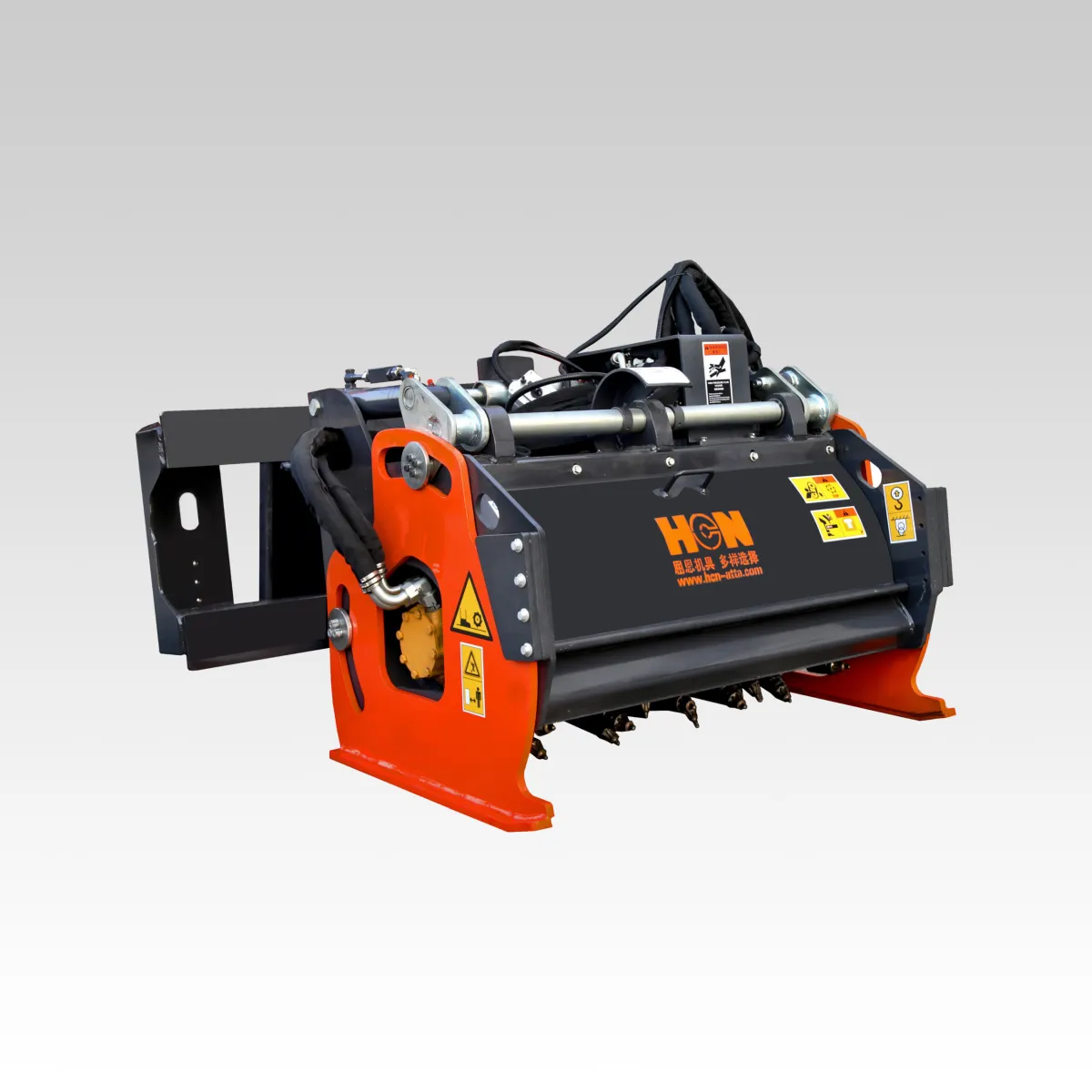
Machine-mounted vibratory compactors — plate or drum attachments for excavators, skid steers, and wheel loaders — offer critical advantages over standalone compaction machines in many common construction scenarios:
- Utility trench backfill: The attachment reaches into the trench while the machine stays at grade level, preventing trench wall collapse risk for equipment operators.
- Confined sites: Building foundation perimeters, basement floors, and retaining wall backfill areas that are inaccessible to self-propelled rollers.
- Machine efficiency: The excavator or skid steer performing the dig-and-backfill operation can also compact without a second machine on site, reducing equipment costs.
- Variable access: A compact hydraulic plate compactor can work in areas as narrow as 400 mm — no walk-behind machine can operate in such confined conditions.
- Depth control: The excavator arm can precisely control compaction depth and plate position, enabling layer-by-layer compaction verification.
Related Products:
Related Product Lines & Technical Guides
Use these HCN resources to compare specifications, carrier fit, and export procurement options referenced in this article.