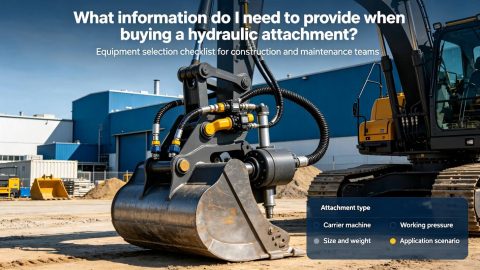
A complete engineering reference: what soil compaction means, how it works, how it is measured, and what compaction equipment to use for each soil type and project condition.
Definition: What Is Soil Compaction?
Soil compaction is the process of mechanically increasing the density of a soil mass by reducing the air voids between soil particles. When compaction force is applied — either through vibration, static pressure, or impact — the particles are forced into closer contact, expelling air and reducing pore space. The result is a denser, stronger, and more stable ground that can support structures, roads, pipelines, and heavy machinery.
In geotechnical and civil engineering, compaction is measured by comparing the dry density achieved on site to a laboratory reference value — typically the Maximum Dry Density (MDD) determined by the Standard or Modified Proctor Compaction Test (ASTM D698 / D1557). A site specification might require 95% or 98% relative compaction before construction can proceed to the next phase.
Why Soil Compaction Matters in Construction
Under-compacted soil is one of the leading causes of structural failure, road damage, and utility pipeline leaks. Without adequate compaction, post-construction settlement can cause foundations to crack, road surfaces to deform, and utility trenches to collapse months or years after completion. Proper compaction is not optional — it is a structural requirement.
- Increased load-bearing capacity: Compacted soil can carry heavier structural loads without excessive settlement
- Reduced permeability: Denser soil limits water ingress, preventing freeze-thaw heave and erosion
- Prevention of differential settlement: Uniform density prevents uneven sinking under structures
- Improved shear strength: Compacted soil resists lateral movement under retaining walls and embankments
- Pavement longevity: Road subbase compaction is the single biggest factor in pavement service life
- Reduced construction defects: Proper compaction of trench backfill prevents sinkhole formation over buried utilities
Soil Types and Their Response to Compaction
Not all soils compact the same way. The Unified Soil Classification System (USCS) and AASHTO classification systems divide soils into groups that respond differently to compaction energy, moisture content, and equipment type:
| Soil Type | Compaction Difficulty | Best Compaction Method | Typical Application |
|---|---|---|---|
| Gravel (GW, GP) | Easy | Vibratory roller or plate | Road base, drainage layers |
| Clean Sand (SW, SP) | Easy | Vibratory plate or drum | Foundation fill, trench backfill |
| Silty Sand (SM, SC) | Moderate | Vibratory or impact | Embankments, utility corridors |
| Silt (ML, MH) | Difficult | Impact rammer, kneading | Engineered fill, subgrade |
| Clay (CL, CH) | Difficult | High-energy vibratory or sheepsfoot | Dam cores, embankments |
| Organic / Peat (PT) | Not suitable | Remove and replace | Must excavate and replace |
The Role of Moisture Content
Moisture content is the single most critical variable in compaction. Every soil has an Optimum Moisture Content (OMC) — the water content at which it achieves its Maximum Dry Density under a given compaction energy. Too dry, and the soil particles cannot slide past each other to reach maximum density. Too wet, and the pore water pressure prevents further densification.
On construction sites, achieving moisture within ±2% of the OMC before compaction is standard practice. This often requires on-site water addition (watering trucks) or drying operations (aeration, lime treatment) depending on the current condition of the borrow material.
How Soil Compaction Is Measured
Construction specifications require compaction verification testing before accepting completed earthwork layers. The most common field test methods are:
- Standard Proctor Test (ASTM D698 / BS EN 13286-2): Laboratory reference test that determines the maximum dry density (MDD) and optimum moisture content (OMC) for a specific soil using standard compaction energy (600 kJ/m³). Used for roads, earthworks, and most civil applications.
- Modified Proctor Test (ASTM D1557): Higher compaction energy (2,700 kJ/m³), used for heavy-traffic roads, airport runways, and applications requiring higher density specifications.
- Sand Cone Replacement Method (ASTM D1556): Field test that measures in-situ density by excavating a small hole, weighing the removed material, and calculating density. Reliable but slow — 30–60 minutes per test.
- Nuclear Density Gauge (ASTM D6938): Non-destructive test that measures density and moisture content in minutes using gamma ray transmission. Fast and widely used but requires operator certification.
- Dynamic Cone Penetrometer (DCP): Lightweight hand tool that estimates soil strength (California Bearing Ratio) from the rate of penetration. Used for rapid assessment of compaction uniformity.
Types of Compaction Equipment
Compaction equipment is selected based on soil type, layer thickness, site access, and required compaction energy. The main categories are:
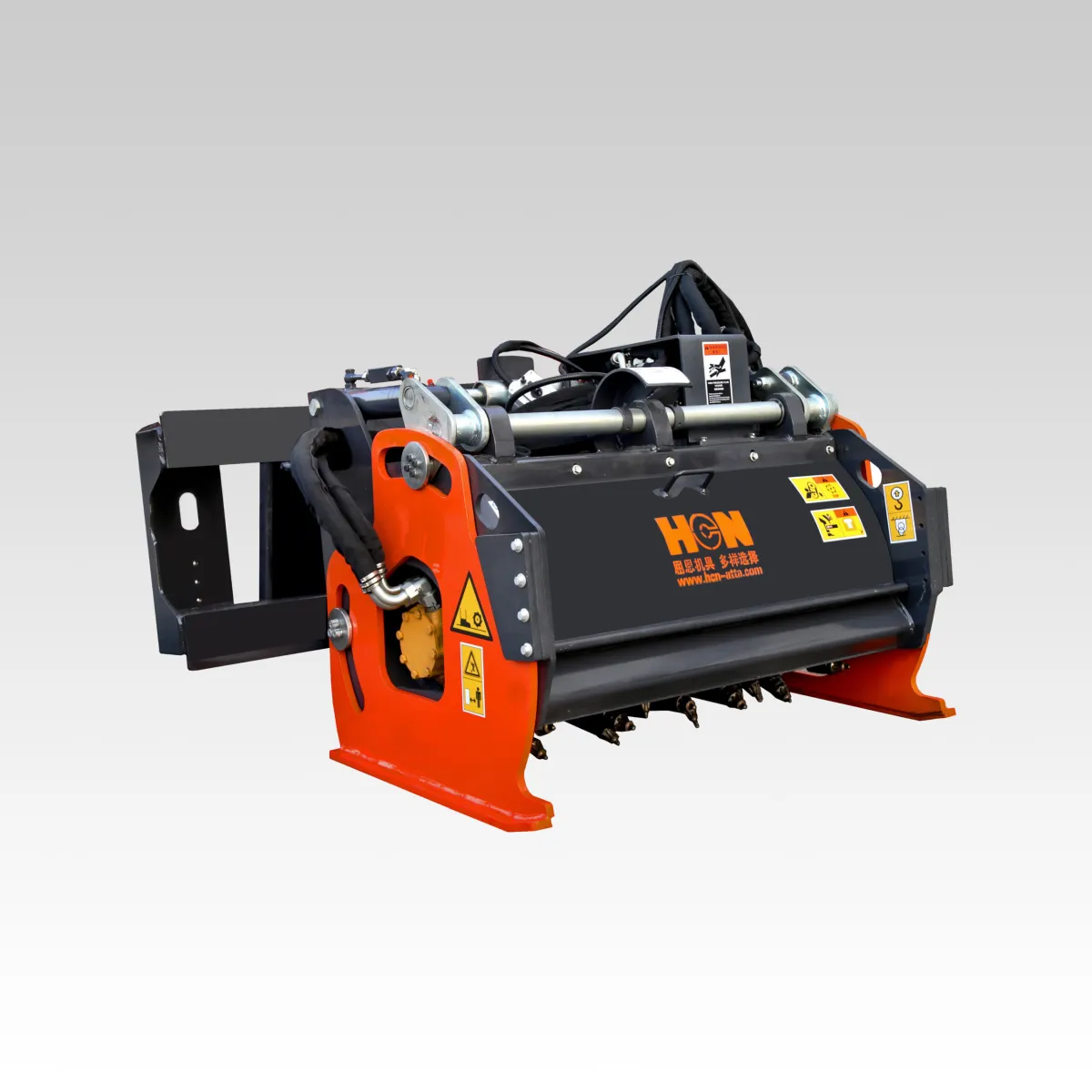
- Vibratory Plate Compactors – Hydraulic attachments for skid steers and excavators generating 20–160 kN centrifugal force. Best for granular soils and trench backfill.
- Trench/Drum Compactors – Narrow drum attachments for confined utility trench compaction. Widths from 300 mm to match standard pipe trench dimensions.
- Walk-Behind Plate Compactors – Standalone machines for small areas. Limited productivity vs. machine-mounted attachments.
- Vibratory Rollers (Smooth Drum) – Large self-propelled machines for road subbase and highway embankment compaction.
- Sheepsfoot / Pad-Foot Rollers – Used for cohesive clay and silt compaction where the pads “knead” soil layers.
- Impact Rammers – Hydraulic or pneumatic rammers for cohesive soils in confined areas.
Compaction Standards and Specifications
Construction projects specify compaction requirements based on the function of the completed layer:
| Application | Typical Spec | Standard |
|---|---|---|
| Road subbase | 95% Standard Proctor MDD | AASHTO T180 / ASTM D1557 |
| Road subgrade | 95% Standard Proctor MDD | AASHTO T99 / ASTM D698 |
| Utility trench backfill | 90–95% Standard Proctor | Project specification |
| Building foundation fill | 95–98% Modified Proctor | ASTM D1557 |
| Airport runway subbase | 100% Modified Proctor | FAA AC 150/5370-10 |
| Earth dam core | 98% Standard Proctor | Engineer specification |
Common Compaction Problems and How to Avoid Them
Despite the availability of effective equipment and well-established test methods, compaction failures remain common on construction sites. The most frequent causes are:
- Excessive lift thickness: Compacting in layers thicker than the equipment can penetrate leaves the lower portion of the lift under-compacted. Maximum lift thickness for plate compactors is typically 150–300 mm uncompacted.
- Incorrect moisture content: Compacting soil that is too dry or too wet relative to its OMC prevents achieving the required density regardless of equipment effort.
- Wrong equipment for soil type: Using a vibratory plate on cohesive clay is ineffective — the vibration frequency that works for sand does not densify plastic clay.
- Insufficient passes: Most equipment specifications state a minimum number of passes (typically 4–8) to achieve rated compaction depth. Fewer passes leave under-compacted zones.
- Lack of testing: Without field density testing, under-compacted areas go undetected until post-construction failure occurs.
Related Products:
Related Product Lines & Technical Guides
Use these HCN resources to compare specifications, carrier fit, and export procurement options referenced in this article.