Sawmills, land-clearing contractors, and municipal park crews share a common bottleneck: logs and poles that a digging bucket cannot grip securely without rolling, slipping, or forcing the operator into unsafe ground handling. Chains and manual tongs still work on tiny volumes. They fail when cycle time, yard throughput, or slope access demand cab-operated control. That is the buying context for a dedicated excavator log grapple.
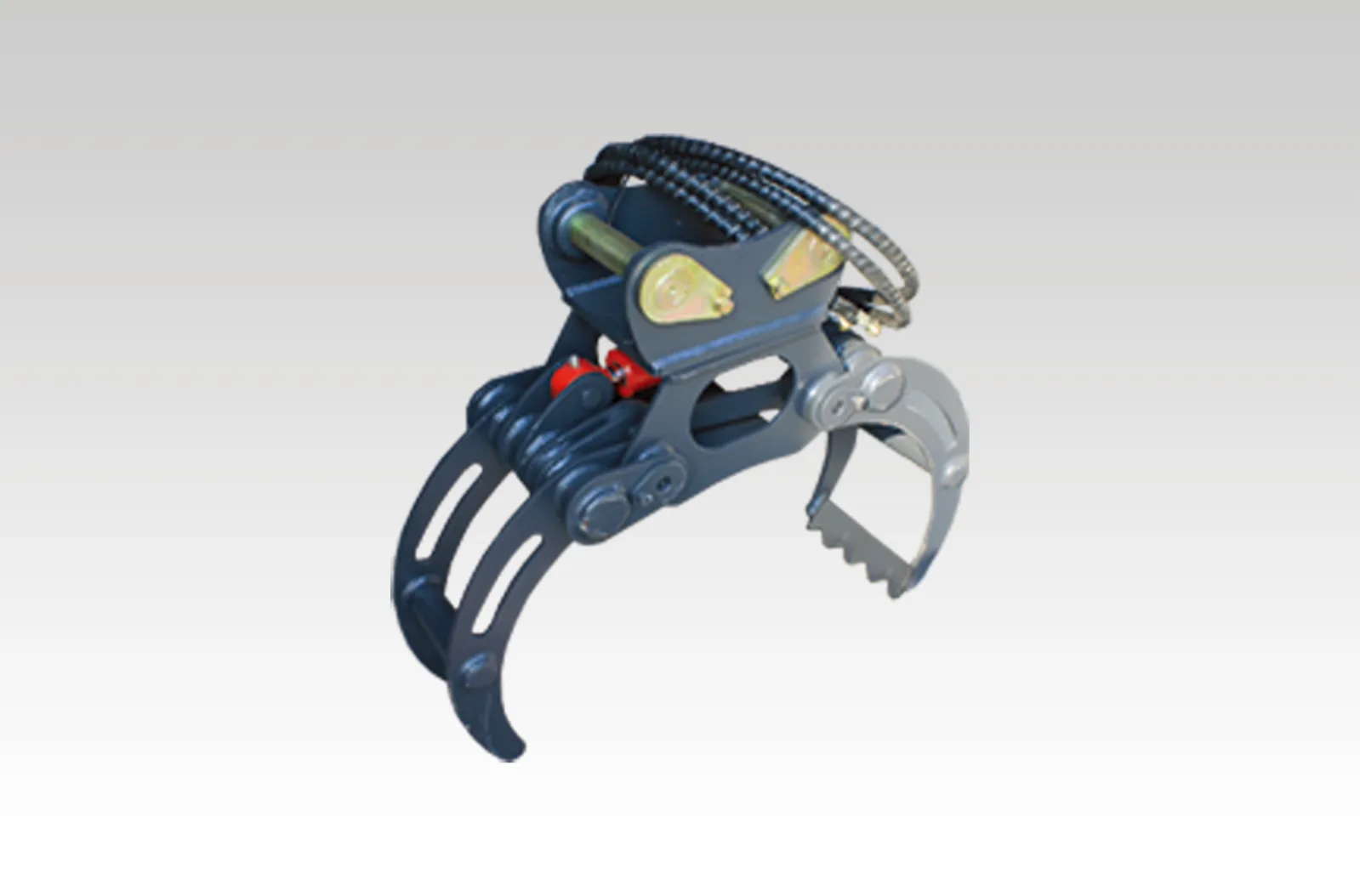
This guide is written for procurement engineers, rental buyers, and distributors evaluating the HN14 log grapple fork from HCN Attachments Manufacture Co., Ltd — factory model HN1403. It is not a product-launch press note. The sections below start from published datasheet numbers, then separate log grapples from buckets and tree shears, and finish with a copy-ready RFQ checklist. Live factory values are on the HN14 Log Grapple Fork product page.
HN14 at a glance — published factory specs
Qualify the unit against these HN1403 figures before you compare brochure photos:
| Specification | HN1403 |
|---|---|
| Maximum opening | 770 mm |
| Width | 295 mm |
| Length | 963 mm |
| Transport height | 1,165 mm |
| Total weight | 82 kg |
| Minimum grip diameter | Φ290 mm |
| Operating pressure | 16–21 MPa |
| Grab weight capacity | ≤340 kg |
| Compatible carriers (published) | 3–6 tonne excavator |
Two practical notes: (1) treat Φ290 mm minimum grip diameter and 770 mm max opening as the stem/log size window — measure typical diameters on your yard before PO; (2) the 82 kg attachment mass keeps the tool light for mini excavators, but tip charts still govern when the grab is loaded near 340 kg.
Who should shortlist a log grapple fork?
Shortlist a hydraulic log grapple when at least three of the following are true on your typical jobs:
- You move round timber, poles, or cut stems more often than you dig soil
- A bucket keeps dropping or rolling logs during load-out
- Your primary carriers are mini / compact excavators in the 3–6 t class
- Operators need cab control on slopes, soft ground, or crowded yards
- You need CE-matched documentation for export, tender audit, or rental insurance
If your work is mostly felling standing trees above brush-cutter capacity, start with a tree shear and add a grapple for staging. If your work is reducing vegetation in place, look at brush cutters or flail mowers — a log grapple does not mulch.
Log grapple vs bucket vs tree shear — do not mix the jobs
Buyers searching “excavator grapple” often receive digging buckets, sorting grapples, and felling shears in the same results. Match the tool to the end-state of the material:
| Selection criteria | Log grapple fork (HN14) | Digging / GP bucket | Tree shear |
|---|---|---|---|
| Primary job | Grip, lift, and place round timber | Scoop soil and loose fill | Fell standing stems |
| Material control | Clamping jaws / fork geometry | Open scoop — poor on round logs | Cutting edge, then separate handling |
| Best fit | Yards, sawmills, selective log moves | Earthworks and trench dig | Land clearing before haul-off |
| Procurement tip | Match opening and min grip to log OD | Do not buy a bucket to “almost” hold logs | Pair with a grapple if you stage timber intact |
Many forestry and land-development fleets stock both a shear and a log grapple: shear to fell, grapple to load. HCN’s related forestry tools — including the HN41 tree shear and HN38 brush cutter — cover those adjacent jobs without forcing one SKU to do everything poorly.
Where the HN14 earns its keep
Timber yards and sawmill infeed — Moving cut logs from stacks to trailers or infeed decks without ground crews chaining every stick.
Land clearing and selective removal — After stems are felled, staging logs for haul-off while the excavator stays on the corridor.
Municipal park and trail work — Relocating fallen trunks and poles where walk-behind handling is slow or unsafe.
Farm and orchard boundary clearing — Compact excavators already on site can grip and relocate mid-size timber without a dedicated loader.
Rental and dealer packages — A documented CE log grapple with published opening, grip diameter, and pressure limits is easier to rent beside mini excavators than an undocumented trading-company grab.
Design points buyers should verify on HN14
- 770 mm maximum opening — Upper window for log OD and bundle geometry; measure your largest routine stem.
- Φ290 mm minimum grip diameter — Lower window; undersize stems may need a different jaw set or handling method.
- ≤340 kg grab capacity — Plan tip charts and swing loads with attachment mass (82 kg) plus payload.
- 16–21 MPa operating pressure — Confirm auxiliary relief at working temperature, not cold idle.
- 3–6 tonne excavator class — Sized for mini/compact carriers common on yards and residential land-clearing fleets.
- CE + ISO 9001:2015 process — Request conformity files that match packing-list serials for regulated markets.
Hydraulic and mounting checklist before you RFQ
Copy this list into your inquiry — it is what HCN sales engineers need to quote cleanly within one business day:
- Excavator make, model, year, and operating weight
- Auxiliary circuit pressure (MPa / bar) and flow at working temperature
- Coupler type (pin-on / quick hitch) and pin-to-pin dimensions
- Typical log / pole diameters (min and max) and average piece weight
- Duty: yard stacking, trailer load-out, slope clearing, or mixed
- Destination country and CE / local conformity requirements
- Quantity, preferred Incoterms, and target delivery window
Skipping diameter and weight confirmation is the most common reason log grapples disappoint on site. A tool that “looks heavy-duty” still drops undersize stems or overloads tip charts when the grab window does not match real timber.
HN14 vs larger forestry grapples — how to choose
The HN14 programme targets mini excavator log handling, not primary harvesting on 20+ tonne forestry machines. Choose HN14 when:
- Carrier weight is roughly 3–6 t
- Attachment mass must stay near 82 kg
- Routine pieces fit the Φ290–770 mm grip/opening window and ≤340 kg grab limit
If your fleet runs mid-class excavators on continuous timber production, ask HCN for larger grapple options in the excavator buckets & grapples and forestry ranges before locking a PO on a mini-class tool.
HCN Attachments — factory-direct forestry & grapple supplier
HCN Attachments Manufacture Co., Ltd is a factory-direct engineering machinery attachment manufacturer established in 2008 in Xuzhou, Jiangsu. The company supplies contractors, rental fleets, OEM partners, and distributors in 60+ countries with in-house engineering, welding, machining, assembly, and export documentation under one roof — 400+ models and 500+ patents across the catalogue.
- OEM / private-label programmes — Bracket drawings and carrier confirmation before volume PO
- CE-certified SKUs — Documentation aligned to shipped serials
- Mixed forestry kits — Log grapples, tree shears, brush cutters, and flail mowers from one factory
- Parts and technical response — Pins, cylinders, and wear parts stocked for export customers
Conclusion — when the HN14 is the right RFQ
Choose the HN14 log grapple fork when you need a CE certified, datasheet-backed excavator log grapple for timber yards, selective land-clearing load-out, and mini-excavator pole moves — with 770 mm max opening, Φ290 mm minimum grip diameter, ≤340 kg grab capacity, 16–21 MPa operating pressure, and a published 3–6 tonne carrier band. Skip it if your primary job is digging soil, mulching brush in place, or felling large standing timber without a separate handling plan.
Review the full specification table on the HN14 Log Grapple Fork page, then send the RFQ checklist above to HCN Attachments. Compare adjacent forestry tools on the HN41 tree shear and HN38 brush cutter pages, or browse the full attachments catalog when packaging dig + fell + load kits for compact excavator fleets.
Need specs or export pricing? Contact HCN Attachments with your carrier model and quantity.
Related HCN Products
HN14 Log Grapple Fork
HN14 Log Grapp…
HCN HN14 Log Grapple…
Excavator Buckets & Grapples
HN14 Log Grapple Fork — specs & quote →Related Product Lines & Technical Guides
Use these HCN resources to compare specifications, carrier fit, and export procurement options referenced in this article.