If your fleet already runs wheel loaders for municipal routes, quarry yards, or road-rehab contracts, you already know the bottleneck: asphalt patches, frozen shoulders, concrete kerbs, and secondary rock that a bucket cannot break without burning hours — or calling a second contractor with an excavator hammer. A loader-mounted hydraulic breaker closes that gap. The operator stays in the cab, the carrier stays on the job, and production does not wait for another machine to mobilise.
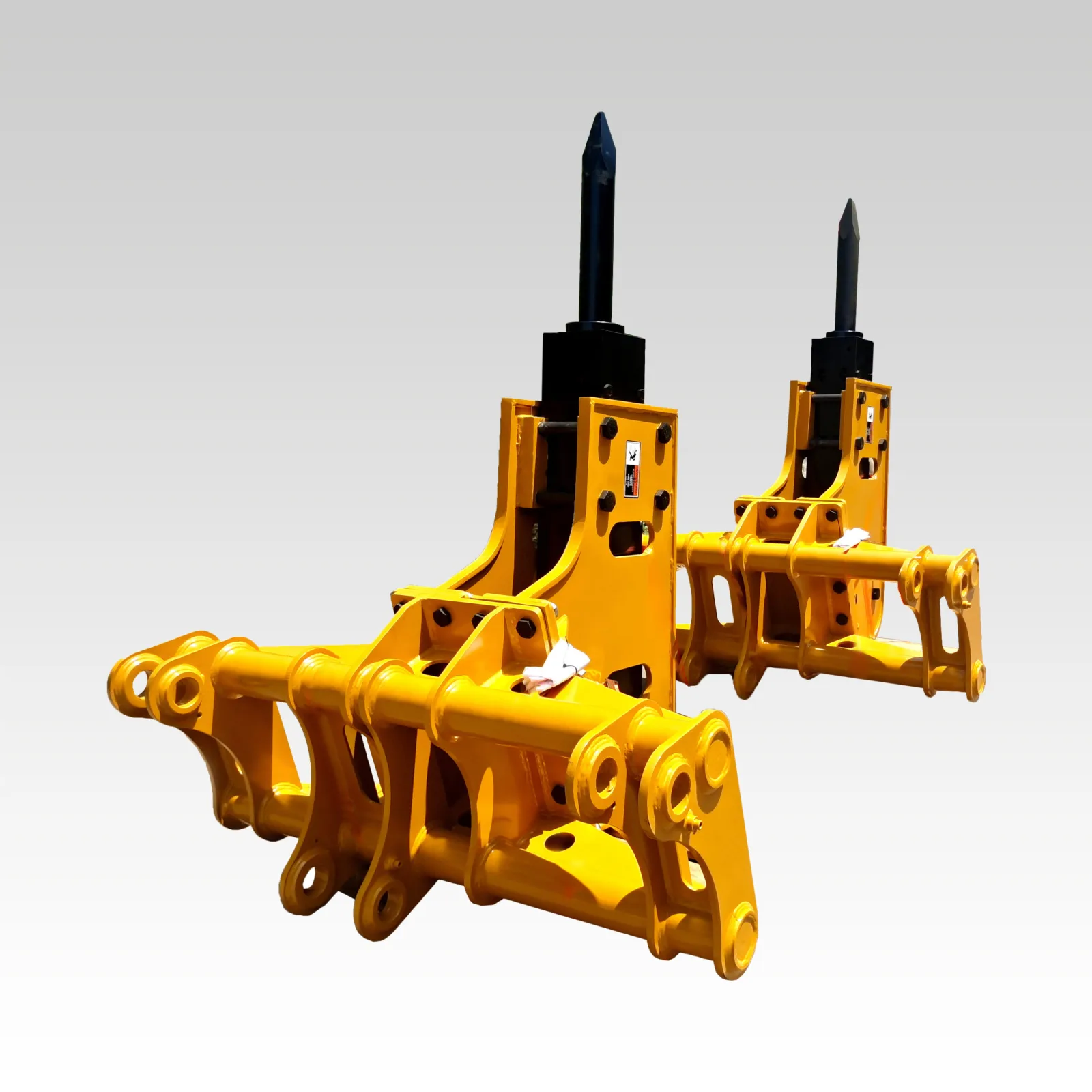
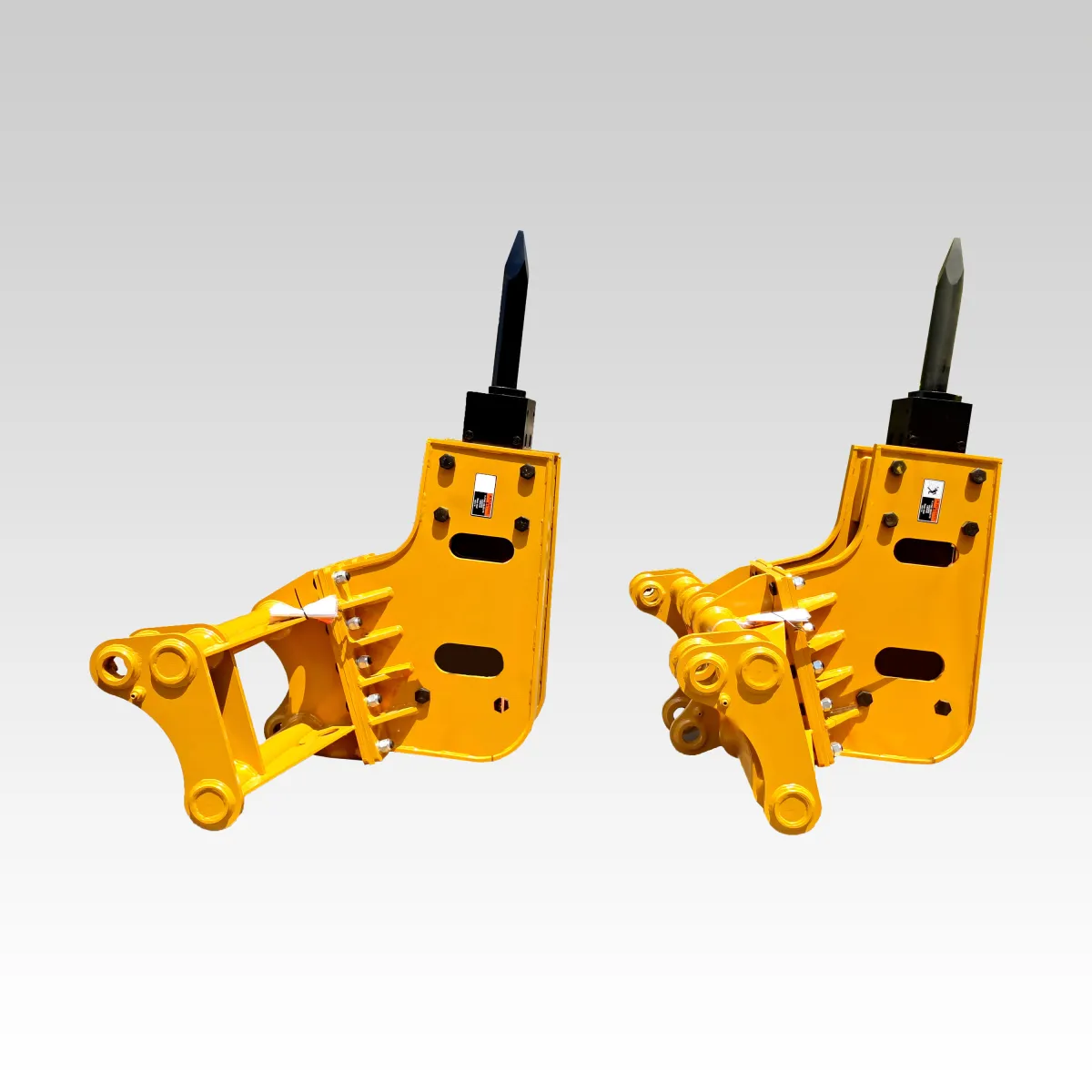
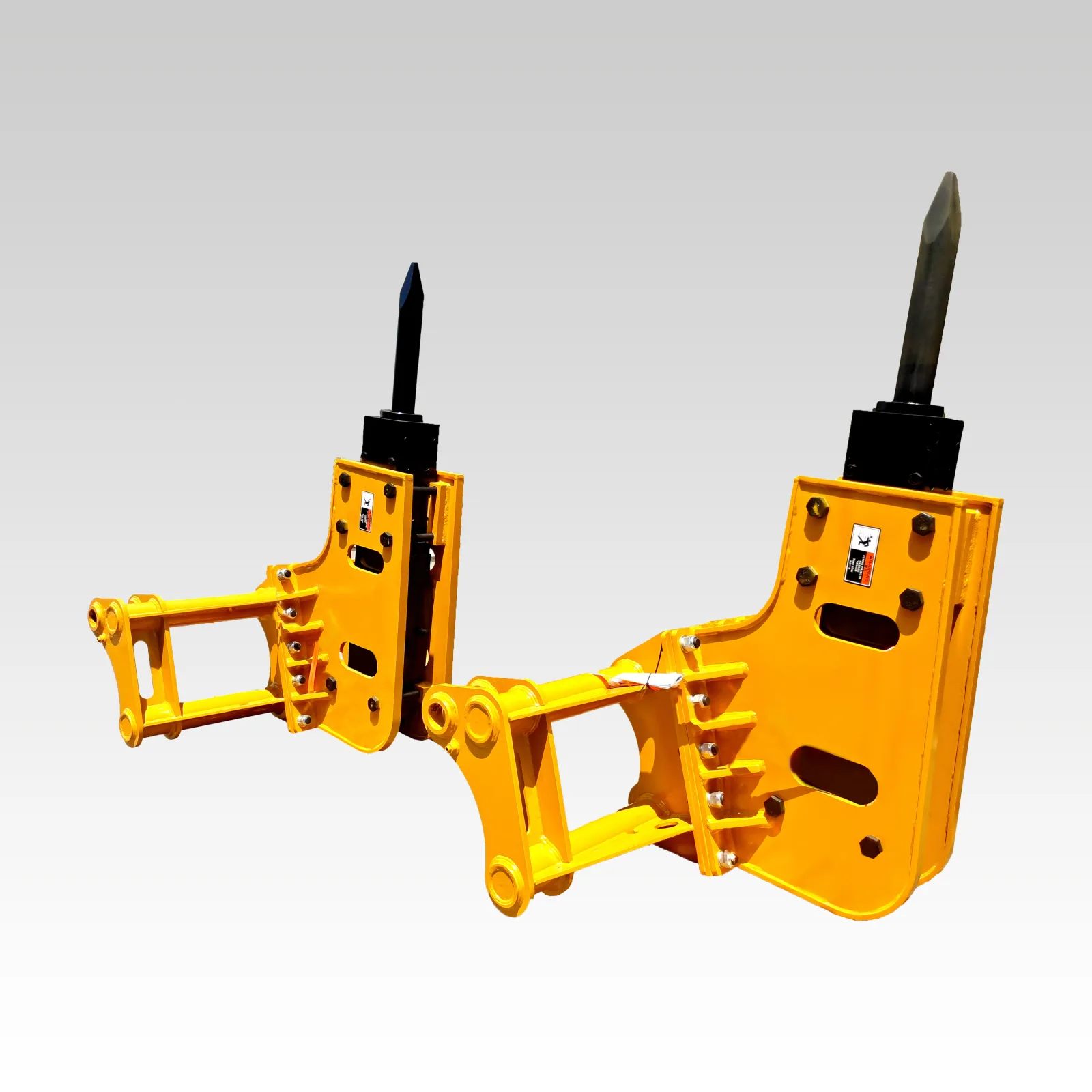
That is the buying context for the BM16 hydraulic breaker from HCN Attachments Manufacture Co., Ltd. Factory model BM16100 is published as a CE certified attachment with clear hydraulic envelopes, tool diameter, impact frequency, and carrier class limits. The numbers below come from the live product datasheet on the BM16 Hydraulic Breaker product page — not from vague “heavy-duty” marketing copy.
BM16 at a glance — published factory specs
Start with the datasheet before you compare brochure photos. These are the values HCN lists for BM16100:
| Specification | BM16100 |
|---|---|
| Tool diameter | Ø100 mm |
| Hydraulic flow | 80–110 L/min |
| Operating pressure | 150–170 bar |
| Impact frequency | 350–700 bpm |
| Nitrogen pressure | 12–14 kg/cm² |
| Weight (incl. mount) | 1,349 kg |
| Overall length × width × height | 1,290 × 644 × 2,495 mm |
| Compatible carriers (published) | 5 t wheel loader / 11–16 t excavator |
Two practical notes for procurement engineers: (1) confirm auxiliary flow and relief pressure at working temperature, not at cold idle; (2) treat the published carrier band as a tipping-stability and hydraulic gate — send make, model, operating weight, and pin-to-pin dimensions before you lock a purchase order.
Why fleets specify a loader hydraulic breaker
Walk-behind breakers and rented excavator hammers still have a place on small patches. They lose the argument when daily break-out volume, traffic-window limits, or multi-site municipal routes demand cab-operated production. A wheel-loader rock hammer attachment lets the same machine that hauls millings or salt also open trenches, break frost heave, and demolish kerbs without a second mobilisation.
Buyers screening Chinese hydraulic breakers typically ask the same five questions:
- Does the flow/pressure envelope match our auxiliary circuit?
- Is tool diameter sized for asphalt, concrete, or secondary rock — not undersized marketing steel?
- Can we get CE conformity files that match the serial numbers we import?
- Will OEM-fit brackets land on our Caterpillar, Komatsu, Volvo, Hyundai, CASE, or Bobcat fleet without field fabrication?
- What is the parts and seal-kit lead time after the first season?
The BM16 programme is written for those questions. HCN manufactures at its ISO 9001:2015 campus in Xuzhou, Jiangsu, and positions the BM16 inside its hydraulic breakers & rock hammers category alongside excavator-class tools for fleets that run mixed carriers.
Wheel loader vs excavator — how to read the carrier line
The BM16 datasheet lists both a 5-tonne wheel loader class and an 11–16 tonne excavator band. That dual listing is useful for distributors serving municipal and civil customers, but it is not a free-for-all: hydraulic power, stick geometry, and tipping charts differ by platform.
- Wheel loaders — Best when the breaker is one seasonal tool on a multi-attachment loader (broom, plow, bucket, breaker). Confirm high-flow third function capacity and front-end stability with the published 1,349 kg mounted weight.
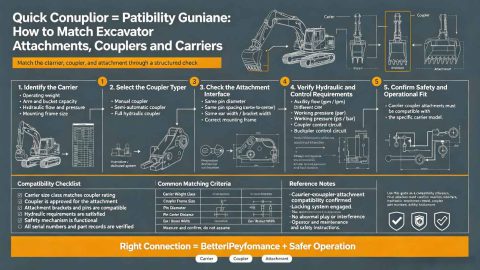
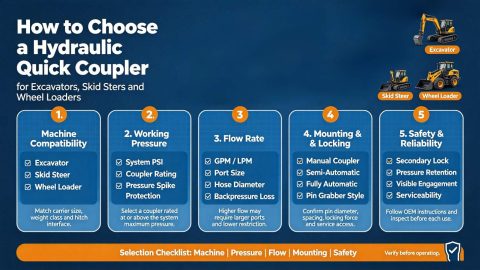
- Excavators (11–16 t) — Better reach into trenches, slopes, and secondary breaking piles. Match boom/stick ratings and quick-coupler standards before assuming a loader bracket will transfer.
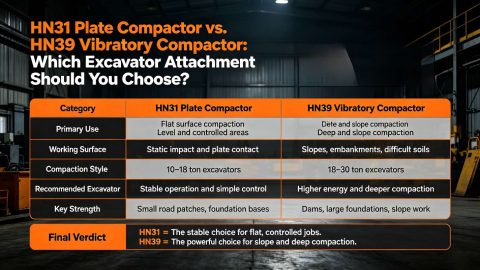
If your primary fleet is excavators only and you need a trench-focused compaction story after breaking, pair breaker work with HCN’s HN39 vibratory compactor for backfill density acceptance — many road-rehab contracts require both break-out and compaction on the same shift plan.
Where the BM16 earns its keep
Road repair and utility cuts — Opening asphalt and concrete for pipe repair, then cleaning the edges for a proper patch. Impact frequency of 350–700 bpm supports controlled breaking rather than random chisel work.
Municipal and winter damage — Frost heave, failed kerbs, and frozen shoulders where a loader already assigned to salt or plow duty can finish break-out without calling an excavator hammer.
Yard and industrial demolition — Secondary concrete, pads, and scrap piles inside logistics yards where wheel loaders already handle material movement.
Quarry and site prep secondary breaking — Oversized rock that slows loading cycles; confirm rock hardness and tool selection with HCN before specifying for primary hard-rock production.
Rental and dealer fleets — A documented CE breaker with published flow/pressure limits is easier to rent and insure than an undocumented trading-company hammer with no serial-matched paperwork.
Hydraulic and mounting checklist before you RFQ
Copy this list into your RFQ email — it is what HCN sales engineers need to quote cleanly within one business day:
- Carrier make, model, year, and operating weight
- Auxiliary flow (L/min) and relief pressure at working temperature
- Coupler type (pin-on / quick hitch) and pin-to-pin dimensions
- Primary material: asphalt, reinforced concrete, frozen ground, or secondary rock
- Duty cycle: hours per day and typical ambient temperature range
- Destination country and any CE / local conformity requirements
- Quantity, preferred Incoterms, and target delivery window
Skipping hydraulic confirmation is the most common reason imported breakers underperform on site. The BM16’s 80–110 L/min and 150–170 bar window is moderate for a Ø100 mm class tool — many mid-size loader high-flow circuits can meet it — but undersupply collapses impact energy and oversupply risks seal and valve damage.
Key buying points for the BM16 programme
- Ø100 mm tool class — Sized for municipal and road-rehab break-out, not a toy chisel and not an ultra-large quarry hammer.
- 350–700 bpm impact band — Gives operators a controllable frequency range for asphalt versus harder concrete.
- Published nitrogen charge 12–14 kg/cm² — Maintenance teams can verify charge against the datasheet during PDI and seasonal service.
- 1,349 kg including mount — Use this number in tipping and transport planning before the unit ships.
- CE + ISO 9001:2015 factory process — Request conformity files that match the serial numbers on the packing list.
- OEM bracket programme — HCN supports fitment reviews for major loader and excavator brands used in export fleets.
Hydraulic breaker vs cold planer — do not mix the jobs
Road contractors sometimes ask whether a breaker can replace a milling attachment. Short answer: no. A hydraulic breaker fractures material in place; a cold planer removes a controlled pavement depth for resurfacing. If your scope is lane-width milling and profile, look at HCN cold planer attachments under the construction / road-maintenance ranges. If your scope is break-out, kerb demolition, or secondary rock, the BM16 is the correct tool class.
HCN Attachments — factory-direct breaker supplier
HCN Attachments Manufacture Co., Ltd is a factory-direct engineering machinery attachment manufacturer established in 2008 in Xuzhou, Jiangsu. The company supplies contractors, rental fleets, OEM partners, and distributors in 60+ countries with in-house engineering, welding, machining, assembly, and export documentation under one roof — more than 400 models and 500+ patents across the attachment catalogue.
- OEM / private-label programmes — Bracket drawings and carrier confirmation before volume PO
- CE-certified SKUs — Documentation aligned to shipped serials for regulated markets
- Mixed-fleet support — Breakers, compactors, snow tools, and municipal attachments from one supplier
- Parts and technical response — Seal kits and wearing parts stocked for export customers
Conclusion — when the BM16 is the right RFQ
Choose the BM16 hydraulic breaker when you need a CE certified, datasheet-backed wheel loader breaker (or mid-class excavator hammer) for road repair, municipal break-out, and secondary demolition — with Ø100 mm tool diameter, 80–110 L/min flow, 150–170 bar operating pressure, and 350–700 bpm impact frequency published up front. Skip it if your work is primary hard-rock production that needs a larger excavator hammer class, or if your job is precision milling rather than fracture.
Review the full specification table and drawings on the BM16 Hydraulic Breaker page, then send the RFQ checklist above to HCN Attachments. Explore related tools in the hydraulic breakers category or the full attachments catalog if you are building a municipal or road-rehab attachment package.
Need specs or export pricing? Contact HCN Attachments with your carrier model and quantity.
Related HCN Products
BM16 Hydraulic Breaker
BM16 Hydraulic…
HCN BM16 Hydraulic B…
Municipal & Road Maintenance
BM16 Hydraulic Breaker — specs & quote →Related Product Lines & Technical Guides
Use these HCN resources to compare specifications, carrier fit, and export procurement options referenced in this article.