Roads, industrial yards, construction sites, parking areas, and municipal facilities all require regular surface cleaning. For contractors and fleet operators working with heavy equipment, using a dedicated wheel loader sweeper attachment can provide a more productive alternative to manual cleanup and smaller standalone machines.
A properly matched hydraulic sweeper attachment can turn a wheel loader into a versatile road and surface maintenance machine. The right configuration can help operators handle loose dirt, gravel, dust, leaves, construction debris, and other accumulated material while maintaining efficient working cycles across large areas.
For professional buyers, however, selecting a sweeper is not simply a matter of choosing the widest broom available. Carrier compatibility, hydraulic flow, sweeping width, hopper capacity, machine weight, working speed, mounting interface, and application requirements all need to be considered before purchasing.
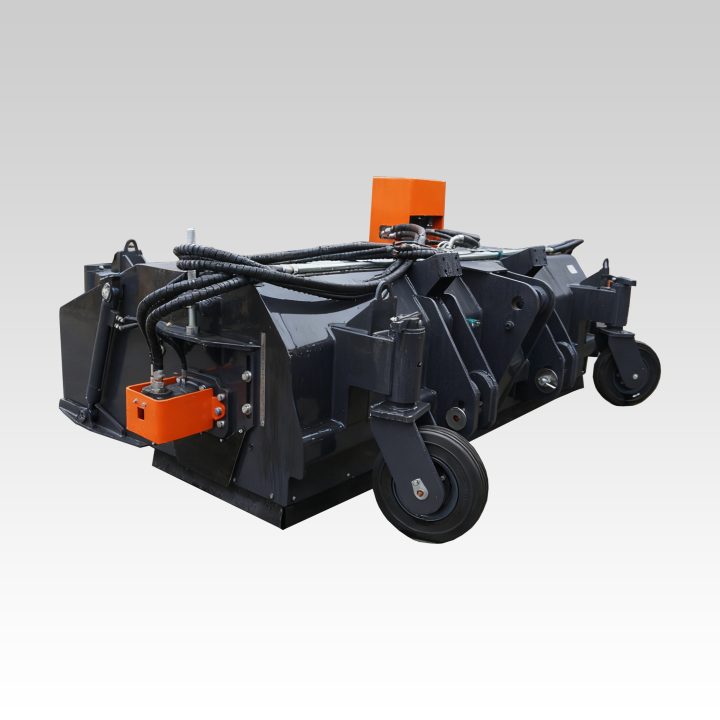
HCN’s BM12 Forward Sweeper is designed for wheel loader applications and is available in the BM12100Ⅱ and BM12110Ⅱ configurations. The two models provide different working widths and hopper capacities to suit different equipment and cleaning requirements.
Why Use a Sweeper Attachment on a Wheel Loader?
Wheel loaders are widely used for material handling, construction, infrastructure work, and municipal operations. Adding a dedicated wheel loader broom attachment can expand the machine’s capabilities without requiring a separate self-propelled sweeping machine for every cleaning task.
A hydraulic sweeper attachment is particularly useful when the same fleet needs to perform multiple jobs. Instead of assigning a machine exclusively to sweeping, contractors can use an existing wheel loader and change attachments according to the project.
This approach can be especially useful for:
- Road and street maintenance
- Construction site cleanup
- Industrial yard cleaning
- Parking lot maintenance
- Municipal surface maintenance
- Roadside and infrastructure cleaning
- Warehouse and logistics yard cleanup
- General debris removal after construction work
The key advantage is versatility. A wheel loader already provides high mobility, lifting capability, and hydraulic power. A suitable sweeper attachment adds dedicated surface-cleaning capability to the same carrier.
What Makes a Wheel Loader Sweeper Suitable for Professional Work?
Professional sweeping applications require more than a rotating brush. The attachment needs to be properly matched to the carrier and working environment. Buyers should evaluate several technical factors before placing an order.
1. Sweeping Width
Sweeping width directly affects how much surface can be cleaned during each pass. A wider working width can increase productivity on large roads, industrial yards, and open areas, provided that the wheel loader has sufficient hydraulic capacity and operating stability.
The HCN BM12 range includes two configurations with effective sweeping widths of 2,580 mm and 2,800 mm. This gives fleet operators the opportunity to select a configuration according to the required working area and carrier specifications.
2. Hopper Capacity
For applications where collected material needs to be transported and dumped rather than simply pushed aside, hopper capacity becomes an important purchasing factor.
The BM12100Ⅱ configuration has a listed hopper capacity of 1.6 m³, while the BM12110Ⅱ provides a larger 2.05 m³ hopper. A larger hopper can reduce the frequency of dumping cycles when operating in areas with significant amounts of accumulated debris.
3. Hydraulic Flow Requirements
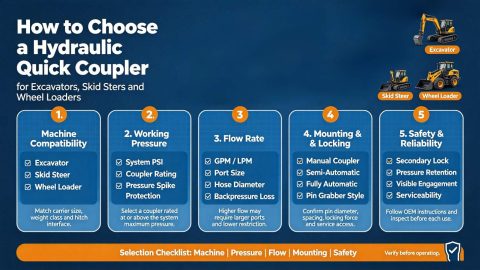
Hydraulic compatibility is one of the most important considerations when selecting a hydraulic sweeper attachment. The carrier must be capable of supplying the required hydraulic flow and pressure for the attachment’s hydraulic system.
According to HCN’s published specifications, the BM12100Ⅱ requires approximately 180–200 L/min hydraulic flow, while the BM12110Ⅱ requires approximately 200–240 L/min. The maximum allowable pressure listed for both configurations is 21 MPa.
Because hydraulic specifications can vary between wheel loader models, buyers should confirm the exact carrier hydraulic output before ordering. Providing the machine make, model, operating specifications, and mounting dimensions allows the attachment configuration to be checked before procurement.
4. Working Speed
Working speed affects both cleaning efficiency and the quality of the sweeping result. The BM12 specifications list a working speed of approximately 5–6.5 km/h.
The ideal operating speed can vary depending on surface conditions, debris volume, material type, brush condition, and the required cleaning result. Operators should always follow the manufacturer’s operating recommendations and adjust speed according to actual site conditions.
BM12 Forward Sweeper Specifications
The BM12 Forward Sweeper is available in two main configurations. The following specifications are published by HCN and should be confirmed against the final carrier configuration before purchase.
| Specification | BM12100Ⅱ | BM12110Ⅱ |
|---|---|---|
| Overall Length | 2615 mm | 2815 mm |
| Overall Width | 3395 mm | 3490 mm |
| Overall Height | 1235 mm | 1235 mm |
| Total Weight Including Mount | 2070 kg | 2260 kg |
| Hopper Capacity | 1.6 m³ | 2.05 m³ |
| Effective Sweeping Width | 2580 mm | 2800 mm |
| Brush Roller Diameter | 800 mm | 800 mm |
| Maximum Allowable Pressure | 21 MPa | 21 MPa |
| Hydraulic Flow | 180–200 L/min | 200–240 L/min |
| Working Speed | 5–6.5 km/h | 5–6.5 km/h |
Common Applications for a Wheel Loader Sweeper Attachment
Road Maintenance
Road maintenance contractors frequently need to remove loose aggregate, dirt, dust, and construction debris from paved surfaces. A road sweeper attachment mounted to a wheel loader can provide an efficient solution for maintaining roads and surrounding areas.
For infrastructure projects, keeping the working surface clean can also help improve site organization and prepare areas for subsequent construction or maintenance activities.
Construction Site Cleanup
Construction sites can accumulate large quantities of soil, gravel, dust, packaging debris, and other loose material. A wheel loader equipped with a sweeper can be used as part of the site’s regular cleanup operation.
This can be particularly useful during project completion, roadwork, earthmoving operations, and preparation of access roads.
Municipal Maintenance
Municipal maintenance teams often need equipment capable of working across different environments. Roads, public access areas, service roads, parking areas, and infrastructure zones may all require routine cleaning.
A municipal sweeper attachment gives fleet managers another way to use existing wheel loaders for surface maintenance instead of relying entirely on dedicated sweeping vehicles.
Industrial and Commercial Areas
Industrial facilities and commercial yards can generate substantial quantities of loose material through vehicle movement, material handling, loading operations, and construction activity.
A heavy-duty sweeper attachment can help maintain large paved areas and access routes while taking advantage of the wheel loader’s existing mobility and hydraulic system.
How to Choose the Right Wheel Loader Sweeper Attachment
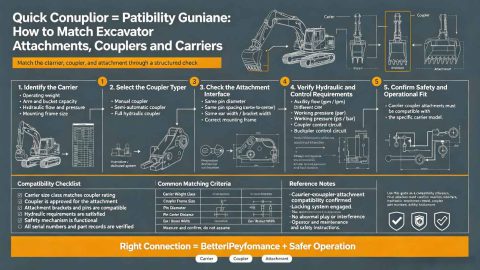
Choosing the correct sweeper should begin with the carrier rather than the attachment. Before requesting a quotation, buyers should prepare the following information:
- Wheel loader make and model: The exact carrier model is essential for compatibility checking.
- Operating weight: The attachment must be suitable for the carrier’s operating class.
- Hydraulic flow: Check the available hydraulic flow against the sweeper’s required flow range.
- Hydraulic pressure: Confirm that the carrier’s hydraulic system is suitable for the attachment.
- Mounting interface: Verify whether the attachment requires a specific quick coupler, pin-on system, or customized mounting bracket.
- Required sweeping width: Match the broom width to the road, yard, parking area, or other working surface.
- Material volume: Consider hopper capacity if collected debris will be transported and dumped.
- Working environment: Identify whether the attachment will be used for road maintenance, construction cleanup, municipal work, or industrial applications.
Providing this information before purchase can reduce compatibility problems and help suppliers recommend a suitable configuration.
Why Carrier Compatibility Matters
One of the most common mistakes when purchasing heavy equipment attachments is selecting a product based only on dimensions or price. A sweeper that is physically compatible with a wheel loader may still require different hydraulic performance, mounting dimensions, or operating capacity.
For this reason, professional buyers should treat attachment compatibility as a complete engineering check rather than a simple mounting question.
HCN supports compatibility confirmation based on carrier information such as machine make, model, operating weight, hydraulic output, and mounting dimensions. OEM mounting interfaces can be configured according to the specified wheel loader application.
Wheel Loader Sweeper vs. Smaller Sweeper Equipment
The best sweeping solution depends on the size of the working area and the equipment already available to the contractor.
For small sidewalks, narrow pathways, and light-duty landscaping work, a compact loader or mini skid steer sweeper may be more practical. For large roads, industrial yards, municipal areas, and heavy construction sites, a wheel loader sweeper can provide the working width, carrier stability, and hydraulic capacity required for larger-scale operations.
This makes wheel loader-mounted sweepers particularly relevant to contractors and fleet operators who already operate medium or large wheel loaders and want to increase equipment utilization.
Key Benefits of a Professional Hydraulic Sweeper Attachment
- Higher equipment utilization: Existing wheel loaders can be used for additional maintenance tasks.
- Large working width: Wide sweeping coverage can reduce the number of passes required on large surfaces.
- Large hopper capacity: Collected material can be contained for subsequent dumping.
- Hydraulic operation: The attachment integrates with the carrier’s hydraulic system.
- Versatile applications: Suitable configurations can support road, municipal, construction, and industrial cleanup.
- Professional fleet integration: Attachment configurations can be selected according to carrier specifications and project requirements.
What Should Buyers Ask Before Ordering?
When requesting a quotation for a wheel loader sweeper attachment, it is useful to provide more than just the desired broom width. A complete RFQ should include the wheel loader model, hydraulic specifications, working environment, destination market, required mounting system, and expected application.
For international procurement, buyers should also confirm shipping dimensions, total attachment weight, documentation, certification requirements, spare parts availability, warranty terms, and delivery lead time.
These details help manufacturers provide a more accurate technical and commercial quotation and reduce the possibility of receiving an attachment that does not match the carrier.
Frequently Asked Questions
What is a wheel loader sweeper attachment?
A wheel loader sweeper attachment is a hydraulic cleaning attachment mounted to the front of a wheel loader. It uses a rotating brush system to sweep loose material from roads, yards, construction sites, industrial areas, and other surfaces.
What is the BM12 Forward Sweeper designed for?
The BM12 Forward Sweeper is designed for wheel loader applications and is positioned by HCN for road and municipal maintenance work. It is suitable for professional surface sweeping applications where a large working width and high-capacity carrier are required.
What are the BM12 sweeping widths?
The published effective sweeping widths are 2580 mm for the BM12100Ⅱ and 2800 mm for the BM12110Ⅱ.
What is the hopper capacity of the BM12?
The BM12100Ⅱ has a listed hopper capacity of 1.6 m³, while the BM12110Ⅱ has a hopper capacity of 2.05 m³.
What hydraulic flow does the BM12 require?
The BM12100Ⅱ is listed at 180–200 L/min, while the BM12110Ⅱ is listed at 200–240 L/min. The exact attachment configuration should be confirmed against the hydraulic specifications of the wheel loader before purchase.
Can the sweeper be customized for different wheel loaders?
Mounting interfaces and configurations can be selected according to the carrier application. Buyers should provide the wheel loader make, model, operating weight, hydraulic information, and mounting dimensions for compatibility confirmation.
What industries use wheel loader sweeper attachments?
Common applications include road maintenance, municipal maintenance, construction, industrial facility maintenance, commercial yard cleaning, infrastructure projects, and other large-area surface cleanup operations.
How do I select the right sweeper size?
Start by checking the wheel loader’s hydraulic flow, pressure, operating capacity, and mounting interface. Then consider the required sweeping width, hopper capacity, working environment, and expected debris volume. Matching the attachment to the carrier is more important than simply selecting the widest available broom.
Final Thoughts
A professional wheel loader sweeper attachment can significantly expand the role of an existing wheel loader in road maintenance, construction cleanup, municipal operations, and industrial surface maintenance. The most important factors are not simply brush size or purchase price, but overall compatibility, hydraulic performance, sweeping width, hopper capacity, operating conditions, and mounting configuration.
With two configurations, effective sweeping widths of up to 2800 mm, hopper capacities up to 2.05 m³, and hydraulic flow options designed for heavy-duty wheel loader applications, the HCN BM12 range provides a practical option for contractors, municipal fleets, equipment distributors, and OEM buyers looking for a professional road sweeping solution.
Before ordering, buyers should provide their exact wheel loader model and hydraulic specifications so the mounting interface and attachment configuration can be confirmed. This simple step can help ensure that the selected sweeper is properly matched to the machine and the intended working environment.
Looking for a wheel loader sweeper attachment for road maintenance or municipal applications? Contact HCN to discuss your carrier specifications, working conditions, required sweeping width, and export requirements.
Related Product Lines & Technical Guides
Use these HCN resources to compare specifications, carrier fit, and export procurement options referenced in this article.