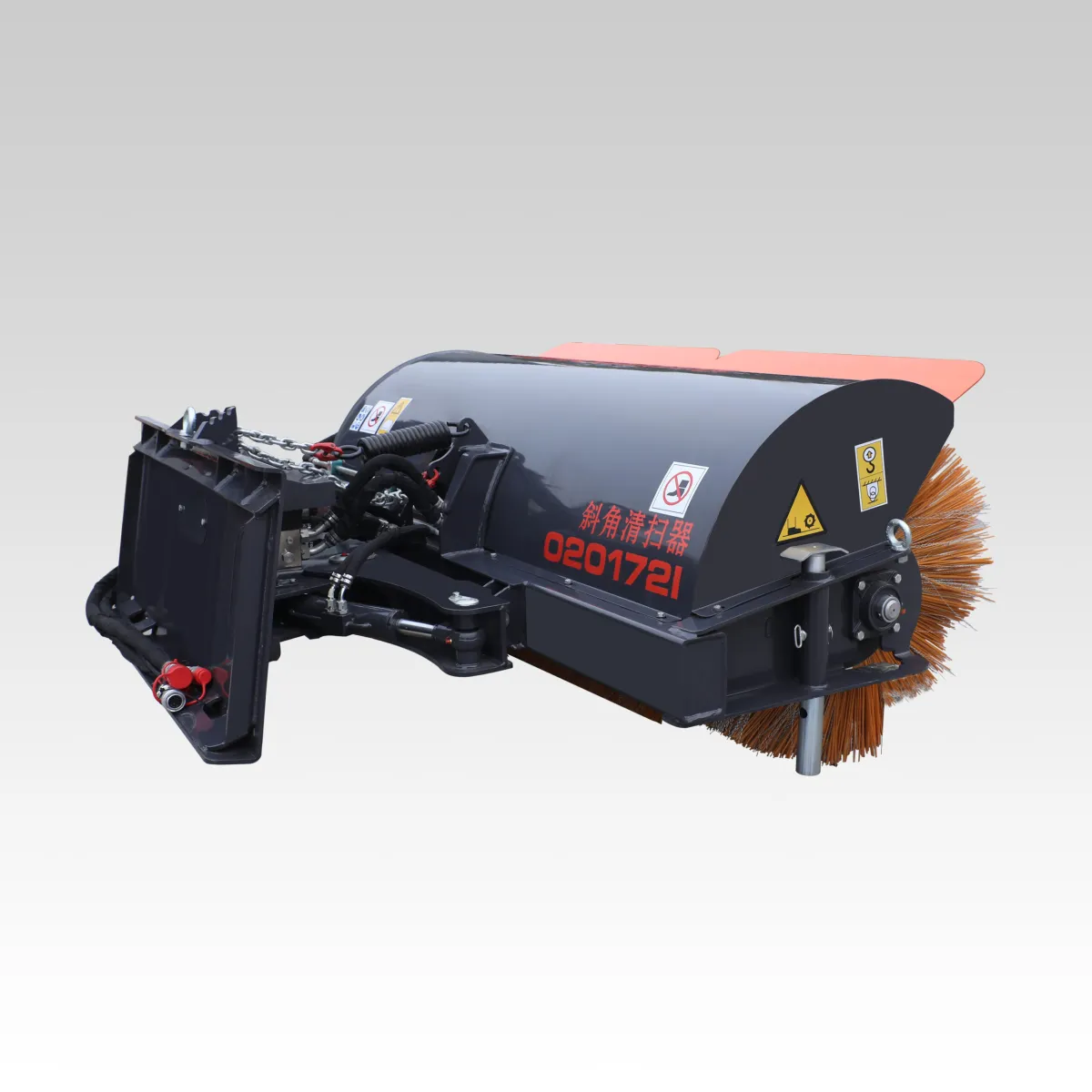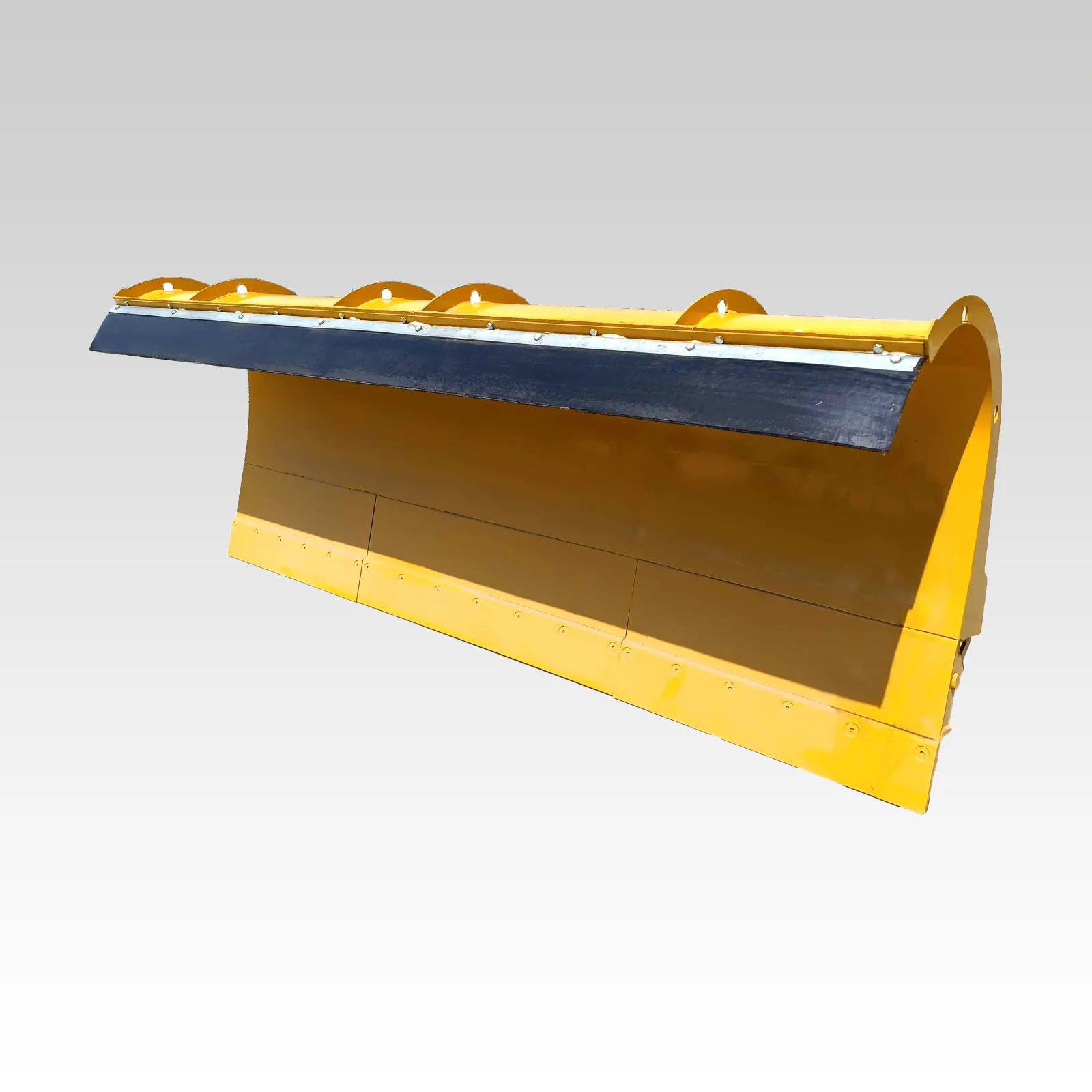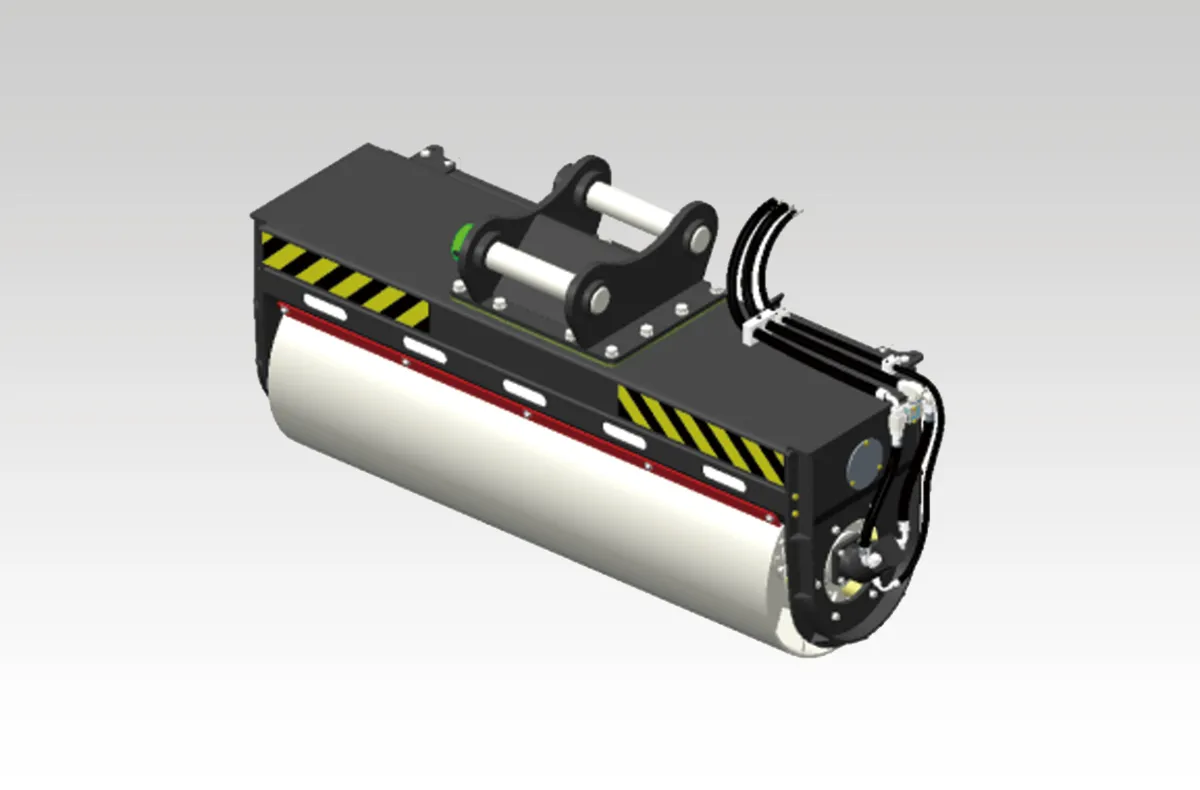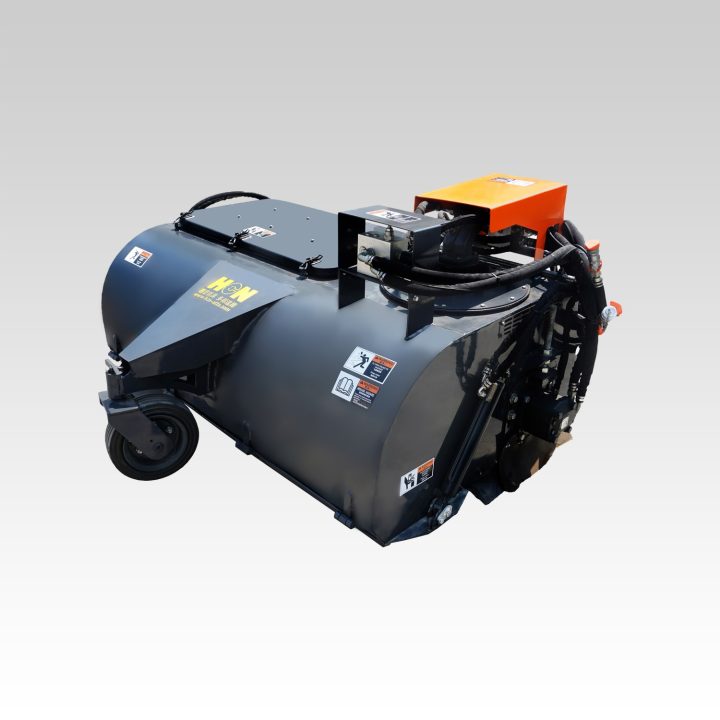
Keeping roads, construction sites, parking areas, sidewalks, industrial yards, and municipal spaces clean requires equipment that can combine productivity, maneuverability, and reliable attachment performance. For contractors and fleet managers already operating skid steer loaders or compact loaders, a hydraulic sweeper attachment can provide a practical way to turn an existing machine into a versatile road and surface cleaning solution.
The HCN 0202 F72NPI Sweeper is designed for skid steer loaders and compact loader applications where efficient sweeping and debris collection are required. With a 1,820 mm sweeping width, 550 mm brush roller diameter, 0.3 m³ hopper capacity, and a total weight of approximately 550 kg including the mount, the attachment is designed for professional cleaning work across construction, municipal maintenance, road service, and industrial environments.
Instead of purchasing a dedicated self-propelled sweeper for every cleaning task, contractors can use a skid steer sweeper attachment to make better use of an existing carrier. This approach can be particularly useful for companies that need one compact machine to perform multiple jobs throughout the year.
Key takeaway: A properly matched skid steer sweeper can help contractors improve cleaning productivity while making an existing skid steer loader more versatile.
What Is a Skid Steer Sweeper?
A skid steer sweeper is an attachment designed to connect to a skid steer loader or compatible compact loader and remove loose material from paved or hard surfaces. Depending on the attachment design, the rotating brush collects dust, dirt, sand, gravel, leaves, construction debris, and other loose materials and directs the material toward a collection hopper or discharge area.
Compared with manual cleaning methods, a hydraulic sweeper attachment allows operators to complete larger areas from the machine cab. This can help reduce manual labor requirements while improving consistency across roads, parking lots, construction areas, sidewalks, industrial yards, and other frequently maintained surfaces.
For buyers searching for a skid steer sweeper attachment, the most important considerations are not only brush width. Carrier compatibility, hydraulic flow, operating pressure, attachment weight, sweeping width, brush diameter, hopper capacity, mounting configuration, and the type of debris being handled should all be evaluated before purchase.
Why Use a Skid Steer Sweeper Attachment?
1. Improve Cleaning Productivity
A powered sweeper can cover substantially more ground than hand-operated brooms or small manual cleaning tools. A wider sweeping path means fewer passes are required to clean a large work area, which can be important for contractors working under time constraints.
The HCN 0202 F72NPI Sweeper has a published sweeping width of 1,820 mm. This width makes it suitable for larger road, construction, municipal, and industrial cleaning tasks where productivity is an important consideration.
2. Make Better Use of Existing Equipment
Many contractors already own skid steer loaders for loading, grading, material handling, landscaping, or construction work. A hydraulic sweeper attachment can add another capability without requiring a separate dedicated sweeping machine.
This attachment-based approach can be attractive to rental fleets, landscaping companies, road maintenance contractors, construction companies, and municipal service providers that need flexible equipment for different projects.
3. Improve Operator Convenience
Traditional sweeping often requires workers to clean large areas manually or operate separate walk-behind equipment. A skid steer sweeper allows the operator to perform the majority of the cleaning work from the carrier, which can improve workflow efficiency on larger sites.
4. Suitable for Multiple Work Environments
A professional sweeper attachment can be used for many different types of cleaning work. Typical applications include construction site cleanup, road maintenance, parking lot sweeping, municipal cleaning, industrial yard maintenance, landscaping cleanup, warehouse access roads, and general surface debris removal.
Key Specifications to Check Before Buying a Hydraulic Sweeper
Choosing the right sweeper attachment starts with understanding the relationship between the attachment and the carrier. A sweeper that is too heavy, too wide, or hydraulically incompatible may not deliver the expected performance.
Overall Dimensions
The published overall dimensions of the HCN 0202 F72NPI Sweeper are approximately 2,060 mm in width, 1,590 mm in length, and 1,010 mm in height. These dimensions should be considered together with the operating space available at the jobsite and the dimensions of the skid steer loader.
Working or Sweeping Width
Sweeping width determines how much surface can be covered during each pass. A wider brush can increase productivity on roads, parking areas, industrial yards, and larger construction sites, while a narrower attachment may be easier to maneuver in restricted spaces.
The 0202 F72NPI model has a published sweeping width of 1,820 mm, providing a broad working path for professional surface cleaning applications.
Brush Roller Diameter
The brush roller is one of the most important components of a sweeper. Brush diameter, brush material, rotation speed, and construction can all influence cleaning performance and service life.
The HCN 0202 F72NPI Sweeper is specified with a 550 mm brush roller diameter. Before ordering, buyers should also confirm the brush configuration and replacement options required for their specific operating environment.
Hopper Capacity
When a sweeper collects debris rather than simply pushing it aside, hopper capacity becomes an important productivity factor. A larger hopper can reduce the number of trips required for emptying during continuous cleaning operations.
The 0202 F72NPI model has a published hopper capacity of 0.3 m³. The actual number of emptying cycles will depend on debris type, material density, surface conditions, and the size of the work area.
Hydraulic Flow and Operating Pressure
Hydraulic compatibility is one of the most important factors when selecting a skid steer sweeper. The carrier must be capable of supplying the required hydraulic flow and pressure for the attachment.
The published specifications for the HCN 0202 F72NPI Sweeper indicate an operating pressure range of 15–21 MPa and hydraulic flow of 60–80 L/min. Buyers should always compare these requirements with the hydraulic specifications of their actual skid steer loader before placing an order.
Where Can a Skid Steer Sweeper Be Used?
Road and Street Maintenance
Road maintenance teams frequently need to remove loose dirt, gravel, dust, leaves, and debris from paved surfaces. A hydraulic road sweeper attachment can help maintain cleaner work zones after construction, repair, or routine maintenance activities.
For contractors responsible for road construction and repair projects, a skid steer sweeper can also be useful during final site cleanup before the work area is reopened.
Construction Site Cleanup
Construction sites can accumulate soil, aggregate, packaging materials, dust, and loose debris throughout a project. A skid steer sweeper can help clean access roads, staging areas, entrances, and paved surfaces without requiring a separate dedicated sweeping machine.
Parking Lot Maintenance
Parking areas require regular cleaning to remove sand, leaves, dirt, and other loose materials. A compact loader equipped with a sweeper attachment can provide an efficient solution for property maintenance contractors and facility operators.
Municipal Maintenance
Municipal departments often need equipment that can handle multiple types of routine maintenance. A skid steer sweeper can be used for roads, sidewalks, public parking areas, recreational facilities, public works yards, and other hard-surface cleaning applications.
Industrial and Commercial Sites
Industrial facilities and commercial properties may need frequent sweeping around loading areas, warehouses, factories, logistics yards, and access roads. A hydraulic sweeper can help keep these areas cleaner while allowing operators to use an existing compact carrier.
Landscaping and Property Maintenance
Landscaping contractors can use sweeping attachments to remove leaves, soil, grass clippings, mulch, and other loose materials from paved areas after maintenance work. The ability to switch attachments also allows the same skid steer to perform multiple tasks during a project.
Skid Steer Broom vs. Skid Steer Sweeper: What Is the Difference?
The terms skid steer broom and skid steer sweeper are often used interchangeably, but they can refer to different attachment configurations.
A simple broom attachment may primarily push or brush material across the surface without collecting it. A sweeper with a hopper or collection system is designed to gather debris during the sweeping process, reducing the need for a second cleanup operation.
For buyers, the best choice depends on the application. If the primary goal is to push dirt or loose material to one side, a broom-style attachment may be sufficient. If the objective is to collect and remove debris from the work area, a hopper-style sweeper may be a better option.
How to Choose the Right Sweeper for Your Skid Steer
Step 1: Check the Carrier Weight and Capacity
Start by checking the operating weight and rated attachment capacity of the skid steer or compact loader. The carrier must be able to safely handle the attachment weight and the material collected during operation.
Step 2: Verify Hydraulic Flow
Compare the machine’s auxiliary hydraulic flow with the sweeper manufacturer’s required flow range. For the 0202 F72NPI model, the published hydraulic flow range is 60–80 L/min.
Step 3: Check the Mounting Interface
Mounting compatibility should be confirmed before purchase. Buyers should provide the carrier make and model, attachment interface, and relevant mounting dimensions when requesting a quotation or compatibility check.
Step 4: Match the Sweeping Width to the Job
A wider sweeping width can increase productivity on open areas, but the attachment must still be practical for the carrier and the working environment. Consider road width, parking area dimensions, access restrictions, and maneuverability.
Step 5: Consider Debris Collection Requirements
If collected debris needs to be transported away from the site, hopper capacity and emptying convenience become important purchasing criteria. For routine light-duty sweeping, a simpler broom may be adequate.
Step 6: Consider Long-Term Maintenance
Brush wear is inevitable in professional sweeping operations. Before purchasing, ask about replacement brushes, wear components, hydraulic components, spare parts availability, and after-sales technical support.
HCN 0202 F72NPI Sweeper: Technical Overview
The HCN 0202 F72NPI Sweeper is designed as a professional attachment for skid steer loaders and compact loader applications. Its published specifications provide a useful reference for contractors and equipment buyers evaluating hydraulic sweeping equipment.
| Specification | Published Value |
|---|---|
| Overall Length | 1,590 mm |
| Overall Width | 2,060 mm |
| Overall Height | 1,010 mm |
| Total Weight Including Mount | 550 kg |
| Sweeping Width | 1,820 mm |
| Brush Roller Diameter | 550 mm |
| Hopper Capacity | 0.3 m³ |
| Air Volume | 1,500 m³/min |
| Filtration Rating | ≤10 μm |
| Operating Pressure | 15–21 MPa |
| Hydraulic Flow | 60–80 L/min |
| Operating Voltage | 12/24 V |
| Compatible Carrier | Skid steer / compact loader |
Specifications can vary according to configuration and carrier requirements. Buyers should confirm the final technical specification, hydraulic compatibility, mounting interface, and configuration with the manufacturer before purchase.
Benefits of Using a Professional Hydraulic Sweeper
- Higher productivity: A powered brush allows operators to cover larger areas efficiently.
- Better machine utilization: One skid steer can perform multiple jobs by changing attachments.
- Reduced manual cleaning: Operators can perform sweeping work from the carrier cab.
- Flexible applications: Suitable for roads, construction sites, parking areas, industrial yards, and municipal maintenance.
- Efficient debris handling: Hopper-based configurations can collect material instead of simply pushing it aside.
- Compact operation: Skid steer loaders can maneuver effectively in many confined work environments.
What Should Contractors Ask Before Ordering a Sweeper Attachment?
Professional buyers should not evaluate a sweeper based only on price. A proper procurement process should include carrier compatibility, hydraulic requirements, brush configuration, attachment weight, working width, hopper capacity, replacement parts, delivery time, warranty, and technical support.
For export purchases, buyers should also confirm the mounting configuration, hydraulic hose specifications, electrical requirements, packaging dimensions, shipping terms, and documentation supplied with the machine.
Providing the exact skid steer model before ordering is one of the simplest ways to reduce compatibility problems. The machine make, model, operating weight, auxiliary hydraulic flow, auxiliary pressure, coupler type, and mounting dimensions can help the supplier determine whether the selected sweeper is suitable.
Frequently Asked Questions About Skid Steer Sweepers
What is a skid steer sweeper used for?
A skid steer sweeper is used to remove loose dirt, dust, gravel, leaves, construction debris, and other materials from roads, parking lots, construction sites, sidewalks, industrial yards, and municipal areas.
Can a sweeper attachment be used on a skid steer loader?
Yes. Many hydraulic sweepers are specifically designed for skid steer loaders and compact loaders. However, compatibility depends on the carrier’s hydraulic flow, operating pressure, attachment capacity, mounting interface, and electrical configuration.
What is the difference between a skid steer broom and a sweeper?
A broom generally brushes or pushes loose material across a surface, while a sweeper may incorporate a collection hopper to gather debris. The best option depends on whether the job requires pushing material aside or collecting it for removal.
How wide is the HCN 0202 F72NPI Sweeper?
The published sweeping width of the HCN 0202 F72NPI Sweeper is 1,820 mm, while its overall width is approximately 2,060 mm.
What is the hopper capacity of the 0202 F72NPI Sweeper?
The published hopper capacity is 0.3 m³. Actual collection performance will depend on the type and volume of debris being handled.
What hydraulic flow does the 0202 F72NPI Sweeper require?
The published hydraulic flow range is 60–80 L/min, with an operating pressure range of 15–21 MPa. The carrier’s actual auxiliary hydraulic specifications should be checked before purchase.
What type of machines can use the 0202 F72NPI Sweeper?
The product is listed for skid steer loaders and compact loader applications. Exact compatibility depends on the carrier’s mounting system, hydraulic output, operating capacity, and configuration.
Is a skid steer sweeper suitable for construction sites?
Yes. Sweeper attachments can be used to clean construction entrances, access roads, paved work areas, parking areas, and other surfaces where loose soil, gravel, dust, and debris accumulate.
Can a skid steer sweeper be used for municipal road maintenance?
Yes. Road and municipal maintenance are common applications for hydraulic sweeper attachments. They can help remove loose debris from paved surfaces and support routine cleaning operations.
What should I provide when requesting a sweeper quotation?
For a more accurate quotation and compatibility check, provide the skid steer or compact loader make and model, hydraulic flow, auxiliary hydraulic pressure, mounting or coupler type, intended application, destination country, and any special configuration requirements.
Conclusion: Is a Skid Steer Sweeper Right for Your Operation?
For contractors, municipalities, rental companies, landscaping businesses, and industrial operators that already use skid steer loaders, a hydraulic sweeper can be a practical way to expand equipment capability while maintaining a compact and flexible fleet.
The HCN 0202 F72NPI Sweeper combines a 1,820 mm sweeping width, 550 mm brush roller diameter, 0.3 m³ hopper capacity, and 60–80 L/min hydraulic flow specification for professional surface cleaning applications. Its suitability should always be evaluated against the carrier’s hydraulic system, mounting interface, operating capacity, and jobsite requirements.
When selecting a skid steer sweeper attachment, focus on compatibility, working width, brush configuration, collection capacity, maintenance requirements, and long-term operating cost rather than purchase price alone. A correctly matched sweeper can help improve site cleanliness, reduce manual labor, and make an existing skid steer loader more versatile.
For technical specifications, mounting compatibility, configuration options, and project-specific requirements, buyers can contact HCN with their carrier model and application details before placing an order.
Related Search Terms
skid steer sweeper attachment, skid steer broom attachment, hydraulic sweeper for skid steer, road sweeper attachment, skid steer road broom, compact loader sweeper, construction site sweeper, municipal sweeper attachment, industrial sweeper, parking lot sweeper, hydraulic broom attachment, heavy duty skid steer sweeper, sweeper broom for compact loader, road cleaning attachment, skid steer cleaning equipment