Most winter crews do not lose a night of work because they lack a plow truck. They lose it because the lot is too wide for a blade that windrows, too tight for a dedicated plow truck, or too urgent to wait for a loader that is already booked. That is usually when someone asks: can we put a real snow pusher on a pickup or light-duty truck and finish the job before morning traffic?
Short answer: yes — if the lot layout, snow depth, and truck class match the tool. This guide walks through that match using HCN’s T04 truck snow pusher as the reference unit. It is written for contractors, property managers, and dealers who already know what a plow does, and want a cleaner decision between plow, blower, and pusher before they issue an RFQ. Live factory numbers sit on the T04 Truck Snow Pusher product page.
What a truck snow pusher is actually good at
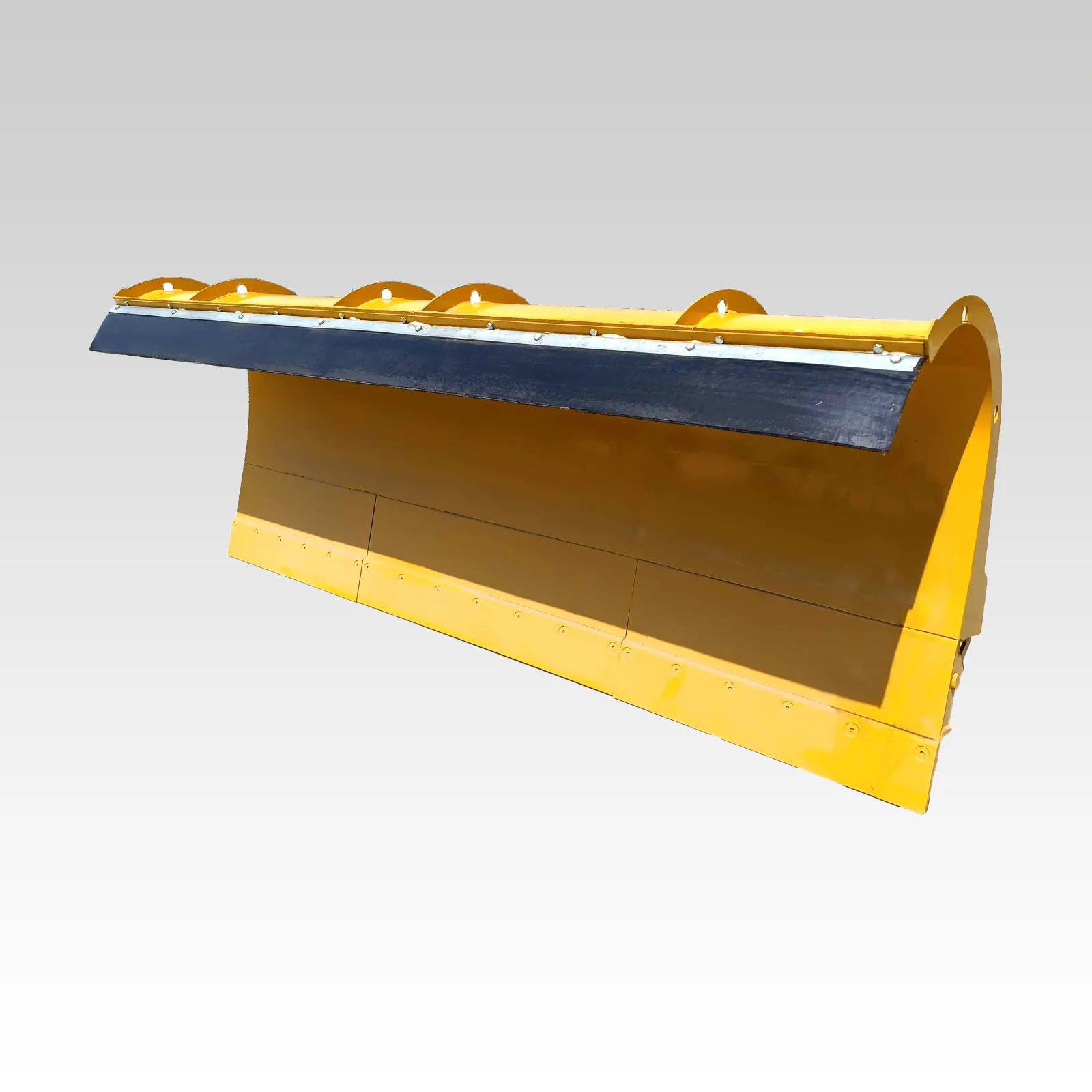
A containment-style truck snow pusher is built to gather snow and push it to a pile or truck-loading point. Side panels keep the windrow from spilling off the ends. On open parking lots, school yards, logistics aprons, and residential complexes, that geometry often clears more square metres per pass than a straight plow blade — because you are not spending half the shift cleaning up the windrows you just made.
It is not a magic tool. If you cannot pile snow at an edge, or if the contract requires throwing snow away from aircraft or drainage, you need a blower. If you are cutting hard-packed ice on a steep grade all night, a heavy municipal plow truck with the right blade setup still wins. The T04 sits in the middle: fast open-area pushing on trucks that fleets already own.
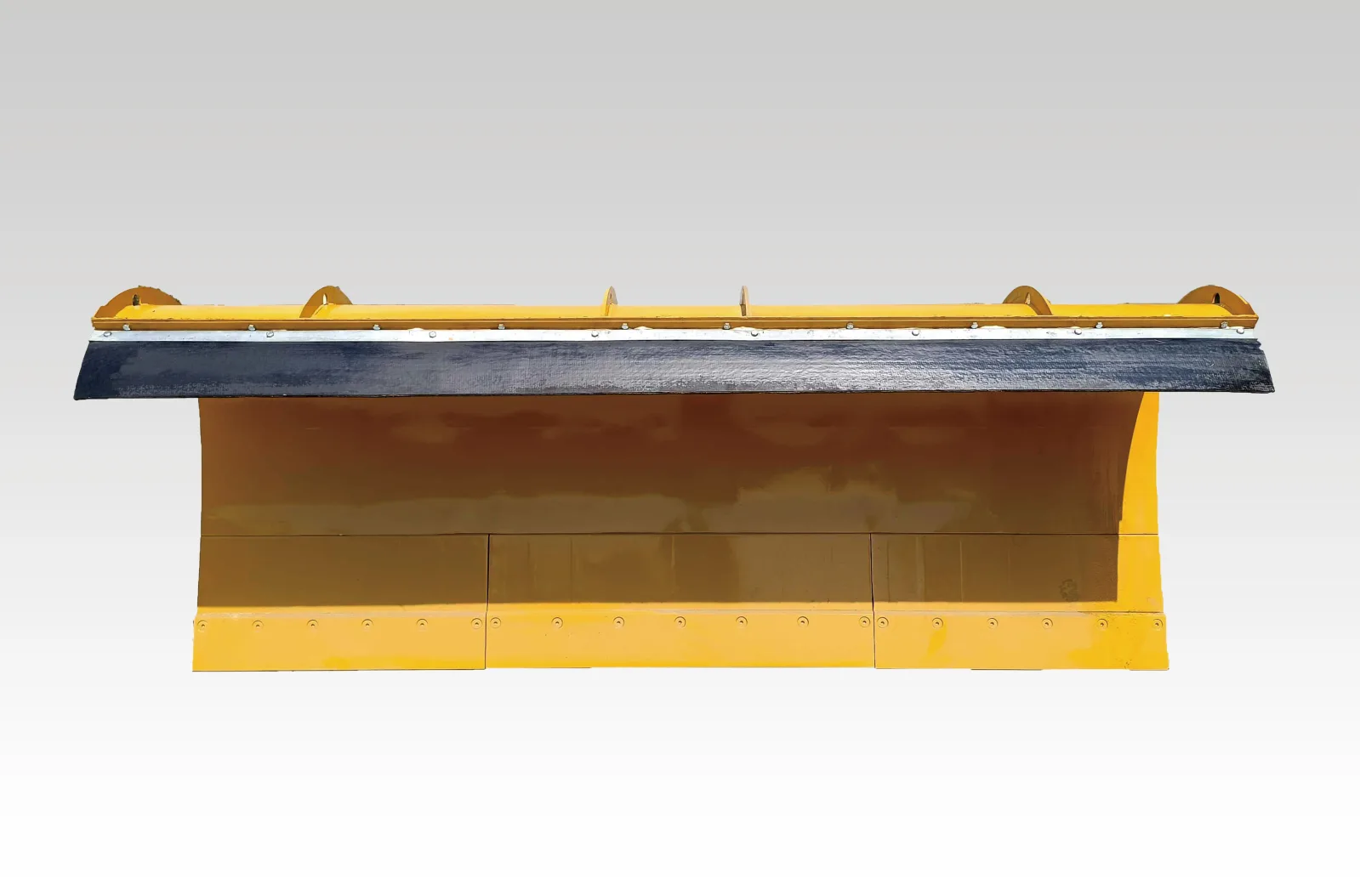
T04 models at a glance
HCN publishes three widths. Use the table as a shortlist filter, not a substitute for truck payload and hitch confirmation:
| Spec | T0472 | T0484 | T0496 |
|---|---|---|---|
| Working overall width | 1,830 mm | 2,130 mm | 2,440 mm |
| Overall length | 895 mm | 895 mm | 895 mm |
| Bucket body height | 557 mm | 557 mm | 557 mm |
| Overall height (no lights) | 917 mm | 917 mm | 917 mm |
| Overall height (with lights) | 996 mm | 996 mm | 996 mm |
| Bucket swing angle | ±30° | ±30° | ±30° |
| Width at 30° level tilt | 1,585 mm | 1,845 mm | 2,150 mm |
| Trip height | 80 mm | 80 mm | 80 mm |
| Operating pressure | 16–21 MPa | 16–21 MPa | 16–21 MPa |
| Weight (frame not included) | 251 kg | 290 kg | 340 kg |
| Published mounting carrier | Pickup truck | Pickup / light-duty truck | Pickup / light-duty truck |
Two details people skip: (1) the “width at 30° tilt” column is what you get when the box is angled for curb work — plan aisle clearance from that number, not only the straight working width; (2) published weights exclude the mounting frame, so tip / GVWR math must include hitch hardware.
Pusher vs plow vs blower — pick the job, then the steel
| Job reality | Better tool | Why |
|---|---|---|
| Open lot, snow can be piled at the edge | Snow pusher | Containment sides cut spill; fewer cleanup passes |
| Narrow lanes, windrow allowed, frequent angle changes | Plow blade | Lighter steering load; familiar municipal pattern |
| No place to pile; must throw snow clear | Snow blower | Impeller throw beats any box pusher |
| Mixed fleet with wheel loaders already on site | Loader pusher / blower | Higher mass and hydraulic power for deep storms |
If half your contracts are apartment lots with a designated snow storage corner, a truck pusher earns its keep. If half your contracts are airport or hospital sites with “no windrows” rules, start with the BM15 snow blower line instead and keep a pusher for satellite parking only.
How to size width without buying “the biggest one”
Wider feels productive until the truck starts wandering on ice or the box catches every light pole. A practical way contractors size T04:
- T0472 (1,830 mm) — Tight residential lots, cul-de-sacs, and pickup-primary fleets where aisle width is the limiter.
- T0484 (2,130 mm) — The usual commercial parking-lot compromise: enough pass width without over-hanging every island.
- T0496 (2,440 mm) — Larger light-duty trucks on warehouse yards and school lots with clear pile zones.
Also check gate width, trailer ramps, and the storage bay where the pusher parks in April. A box that clears snow beautifully but will not fit the shop door becomes a yard ornament.
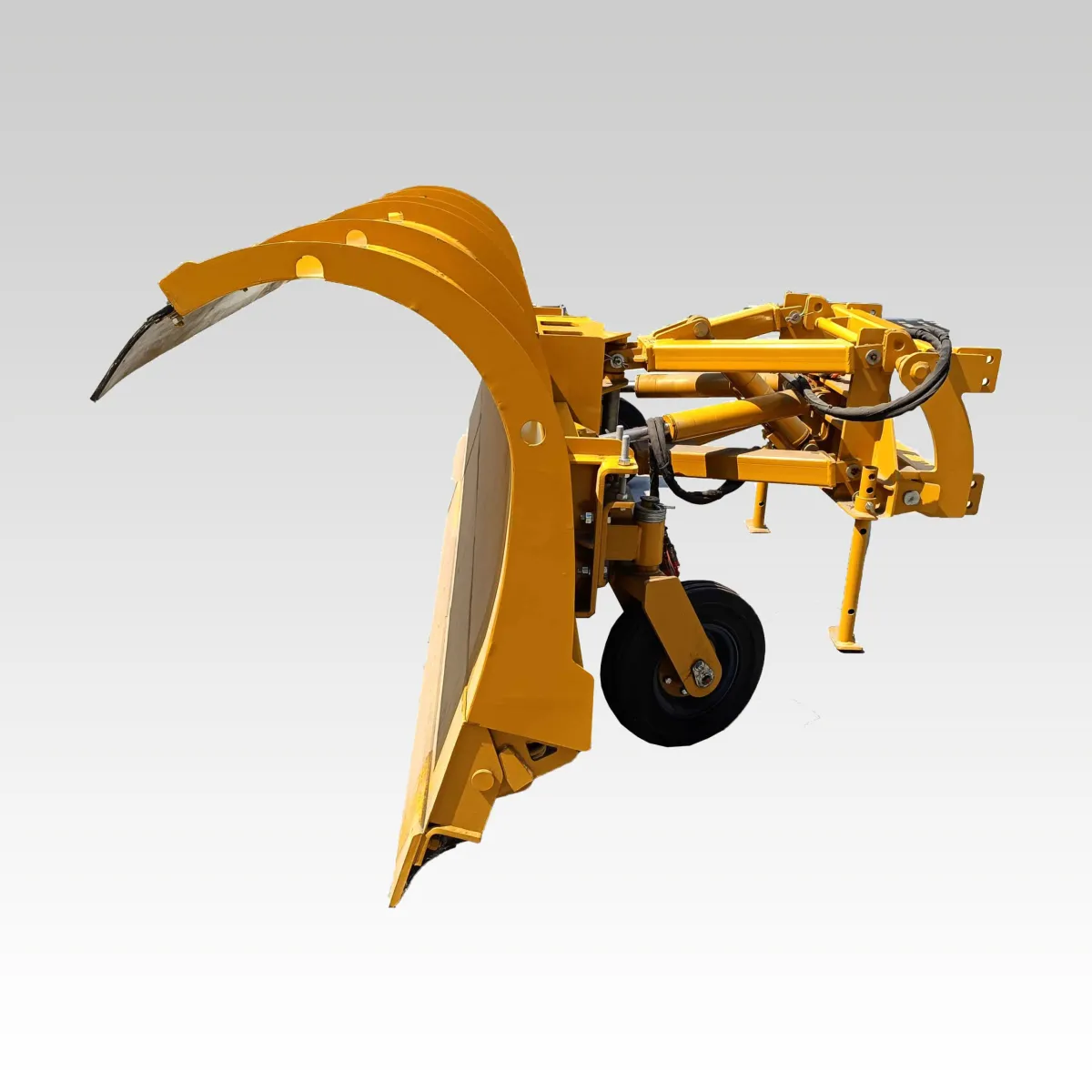
Mounting and hydraulics — get these wrong and the tool sits in storage
The T04 datasheet lists 16–21 MPa operating pressure and a swing of ±30°. That only matters if the truck’s hydraulic package (or PTO/hyd kit) can hold those numbers at working temperature. Cold oil lies. Ask for flow and relief values from the kit you actually run at −15°C, not the brochure peak at 20°C.
Before you send money, send photos:
- Truck make, model, year, GVWR, and front axle rating
- Existing plow hitch / quick-attach plate type (or confirm none)
- Hydraulic kit brand, flow (L/min), and relief setting
- Preferred working width and whether night work needs the light package
- Typical snow type: light powder, wet lake-effect, or mixed with ice chunks
- Destination country and any CE / local conformity file you need for import
HCN’s usual process is to confirm carrier class and mounting frame against those inputs before a volume PO — the same discipline used across the rest of the snow & ice removal range.
Where crews actually run a T04-class pusher
Commercial parking lots — Grocery, retail, and office lots with a known snow dump corner. One pickup with a containment pusher can finish before opening if the depth stays within truck traction limits.
HOA and apartment complexes — Multiple small lots, speed bumps, and parked cars. Swing angle helps you work around islands without swapping to a loader for every awkward corner.
Schools and light industrial yards — Wide asphalt with overnight recovery windows. Trip height and edge condition matter more here than brochure throw distance.
Dealer / rental add-on — Selling a documented truck pusher beside pickup-ready hyd kits is easier than explaining why a customer should buy a second plow truck for satellite lots.
Honest limitations (read this before you RFQ)
- Deep, unplowed storms can exceed what a pickup should push — bring a loader or wait for a first cut.
- Ice bonded to asphalt is a blade/scarifier problem, not a pusher problem.
- If the site has nowhere to store snow, a pusher only relocates your headache.
- Weight figures exclude the mounting frame; do the axle math with real hardware.
None of that makes the tool “bad.” It makes the RFQ better. Buyers who write those constraints into the inquiry get cleaner quotes and fewer surprises on the first storm night.
HCN in one paragraph
HCN Attachments Manufacture Co., Ltd builds winter and construction attachments in Xuzhou, Jiangsu — factory engineering, welding, machining, and export docs under one roof since 2008. The T04 programme is part of that winter line, alongside blowers, brooms, and loader tools for fleets that mix trucks and wheel loaders. If you need CE paperwork matched to serials, say so in the RFQ; do not assume every trading-company “pusher photo” comes with the same file set.
Bottom line
Buy a truck snow pusher when your routes are mostly open pavement with a place to pile snow, and your carriers are pickups or light-duty trucks. The T04 gives you three published widths (1,830 / 2,130 / 2,440 mm), ±30° swing, 16–21 MPa operating pressure, and model weights from 251–340 kg before the mounting frame. Skip it if the contract forbids windrows or your snow depths routinely bury pickup traction — look at blower or loader packages instead.
Specs and model notes are on the T04 product page. Send the checklist above to HCN Attachments, or compare related winter tools in the attachments catalog if you are building a mixed truck + loader program for the next season.
Need specs or export pricing? Contact HCN Attachments with your carrier model and quantity.
Related HCN Products
T04 Truck Snow Pusher1
T04 Truck Snow…
HCN T04 Truck Snow P…
Snow & Ice Removal
T04 Truck Snow Pusher1 — specs & quote →Related Product Lines & Technical Guides
Use these HCN resources to compare specifications, carrier fit, and export procurement options referenced in this article.