Managing excavator attachment operating costs separates profitable fleets from those bleeding margin on unplanned downtime. Contractors and rental companies in the USA, Canada, Australia, and Europe report that attachment failures — not engine issues — cause most mid-project delays on demolition and earthmoving sites. Dealers who help customers control total cost of ownership (TCO) earn repeat parts business and stronger brand loyalty than competitors competing on purchase price alone.
This article outlines seven field-proven strategies to reduce operating costs across hydraulic breakers, buckets, augers, grapples, and couplers. The guidance reflects real maintenance practices used by export customers of HCN Attachments Manufacture Co., Ltd, a CE-certified attachment manufacturer with ISO 9001:2015 quality systems and global shipment experience since 2008. None of these recommendations require exotic technology. They require discipline, correct specification upfront, and supplier partnerships that keep wear parts available when machines are down.
1. Size Attachments Correctly Before Purchase
Mis-sized attachments are the largest hidden cost driver. An oversized hydraulic breaker cracks stick welds. An undersized auger stalls in clay and burns motor seals. A bucket with thin floor plate fails in quarry work within months.
Before adding to fleet inventory, validate:
- Carrier operating weight vs attachment recommended range
- Auxiliary flow and pressure at working temperature
- Pin geometry and coupler stack weight
Correct sizing costs nothing after the fact but saves tens of thousands in carrier repairs over a machine’s life. Reference product specifications in the HCN attachments catalog and request engineering confirmation for OEM or volume orders.
2. Implement a Greasing and Inspection Schedule — and Enforce It
Hydraulic breakers depend on tool shank lubrication to prevent bushing seizure. Industry practice:
| Interval | Action |
|---|---|
| Daily (pre-start) | Visual hose, pin, and housing inspection |
| Every 1–2 operating hours | Grease breaker tool shank |
| 50 hours | Check nitrogen charge; inspect retainer pins |
| 250 hours | Measure bushing wear; inspect coupler hooks |
| 500 hours | Seal inspection; evaluate rebuild interval |
Operators skip greasing when schedules are not posted in the cab or yard. Rental managers should use hour-meter triggers linked to work orders, not calendar reminders alone. Dealers can bundle grease kits and PM checklists with every hydraulic breaker sale to differentiate service.
3. Manage Wear Parts as Inventory, Not Emergency Orders
Waiting 48 hours for a seal kit while a breaker sits idle costs more than stocking the kit proactively.
Dealer stocking guidelines:
- One seal kit per breaker model in active rental fleet
- Two spare tools per three breakers in demolition markets
- Bucket tooth inventory aligned to top three tooth systems in region
Contractor guidelines:
- Rotate teeth before adapter damage
- Replace cutting edges before parent metal thins below spec
- Keep serial numbers on file for correct parts ordering
Ask suppliers for 24-month parts availability commitments in writing. HCN publishes wear part references per model to support distributor inventory planning.
4. Train Operators on Tool Selection and Hydraulic Settings
Operator error accounts for a significant share of premature attachment failure:
- Using moil points in extreme hard rock without blunt tool backup
- Running breakers without down pressure — causing blank firing
- Stalling augers by forcing rotation instead of lifting and clearing
- Overloading grapples beyond lift chart capacity
Provide 30-minute tool-box sessions when deploying new attachments. Include hydraulic setting cards laminated in the cab showing correct flow for each tool. Training reduces warranty disputes and strengthens trust with rental customers auditing machine condition.
5. Store Attachments to Prevent Corrosion and Seal Damage
Attachments stored outdoors without cap protection suffer:
- Hydraulic port contamination
- Rust on pinned connections
- Hose UV degradation
- Water ingress in auger drives
Storage best practices:
- Cap all hydraulic couplers when detached
- Store breakers vertically on stands where possible
- Rotate auger drives quarterly if idle long-term
- Keep coupler locking mechanisms lubricated and covered
Rental yards with organised storage bays report lower contamination-related valve failures at season start — especially in coastal Australia and Middle East humidity.
6. Track Cost per Hour — Not Just Purchase Price
Finance teams should model:
Attachment TCO = (Purchase + Parts + Labour + Downtime cost) ÷ Productive hoursExample: A breaker costing USD 8,000 with USD 2,400 annual wear parts over 800 hours = USD 13/hour attachment cost before downtime. One unplanned week offline on a USD 1,200/day excavator adds USD 8,400 — wiping out savings from a cheaper, unsupported import.
Dealers who provide TCO calculators win bids from sophisticated rental companies. OEM buyers should require field failure rate data from manufacturers, not marketing claims.
7. Partner With Manufacturers Who Support Lifecycle, Not Just Shipment
Low unit price loses value when:
- Wear parts are discontinued within 12 months
- Technical manuals lack hydraulic tuning guidance
- Warranty excludes bushing wear or operator-error definitions are vague
- No engineering contact exists for fitment issues
Evaluate suppliers on export documentation, ISO certification scope, and response time to technical RFQs. HCN maintains CE conformity files, ISO 9001:2015 manufacturing controls, and export support for distributors in 60+ countries — see About HCN for facility and certification details.
Bucket and Auger PM: Often Overlooked Cost Levers
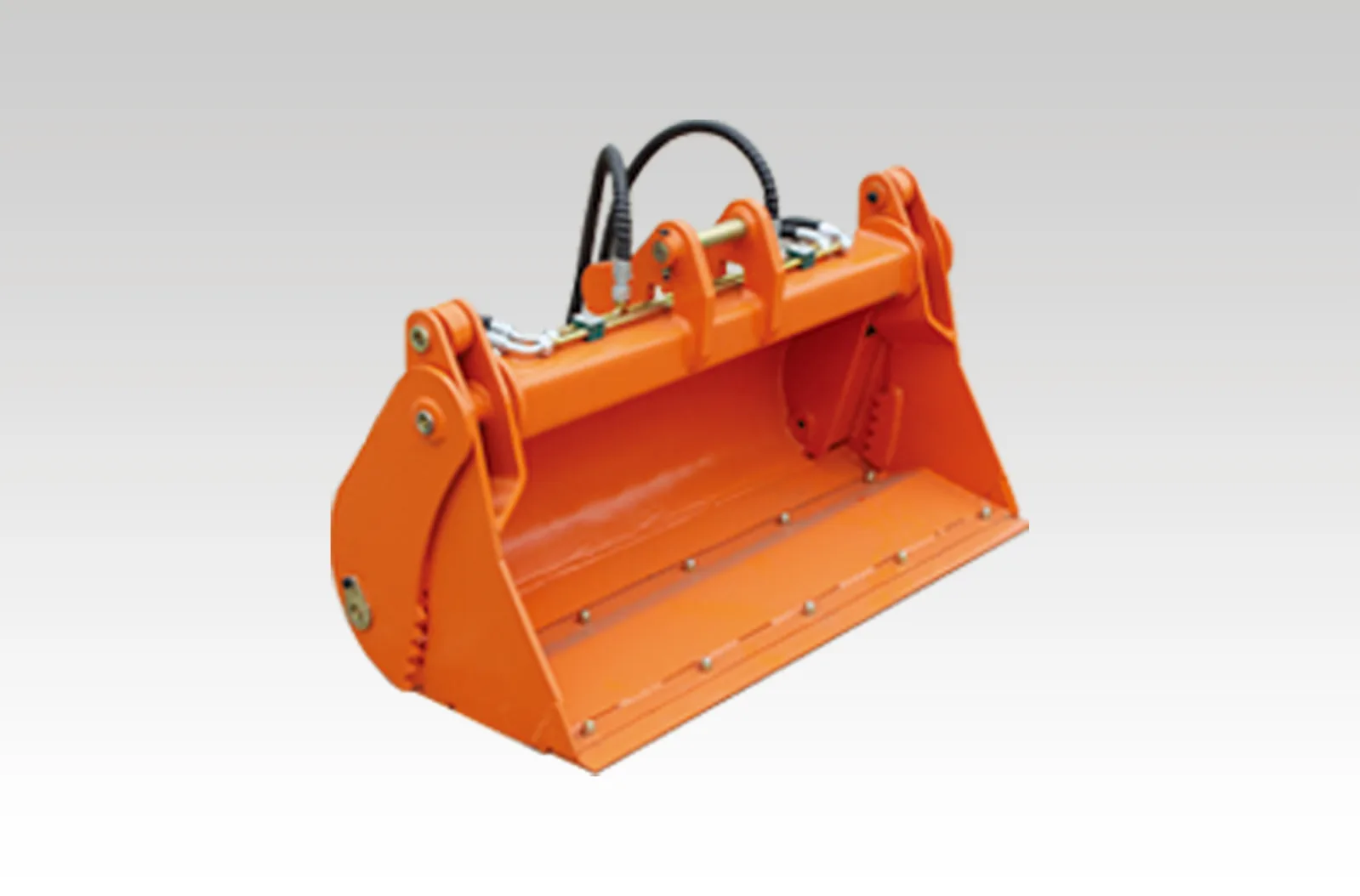
Buckets seem low-maintenance until adapters and lips fail. Include these tasks in fleet programs:
- Weekly: Tooth tightness check; inspect lip plate for cracks
- Monthly: Ultrasonic or gauge check on floor plate in quarry buckets
- Per rotation: Tooth rotation schedule documented on bucket tag
Auger drives fail from running dry after seal leaks. Train operators to report unusual gearbox noise immediately — delayed response often converts a seal kit repair into a full drive replacement. Dealers who stock drive seal kits for their top-selling auger models reduce customer downtime and capture high-margin parts sales.
Rental fleet KPI dashboard
Track these metrics monthly:
- Attachment utilisation hours ÷ available hours
- PM compliance rate (greasing and inspections completed on time)
- Wear parts cost per attachment hour
- Unplanned downtime events by tool type
Fleets that publish KPIs to yard managers see measurable improvement in greasing compliance within one quarter — often the fastest ROI of any cost-reduction initiative.
Coupler and hose maintenance
Quick coupler hooks and wedges wear silently until an attachment drops risk emerges. Inspect lock wear limits per ISO 13031 guidance where applicable. Hydraulic hoses on breakers flex thousands of cycles per shift — replace hoses at manufacturer interval or when outer cover exposes reinforcement. Burst hoses contaminate the site and shut down production for hours; hose kits cost a fraction of one lost rental day.
Conclusion
Reducing excavator attachment operating costs requires correct specification, disciplined maintenance, smart parts inventory, operator training, proper storage, TCO tracking, and supplier partnerships built for the long term. Contractors and rental fleets that adopt these seven practices improve uptime, protect carrier assets, and reduce cost per cubic metre or per billable day.
For attachment specifications, wear part lists, or export pricing aligned to your fleet, browse HCN products or contact the export team with carrier models and annual hour estimates.
Frequently Asked Questions
How often should hydraulic breaker bushings be replaced?
Inspect at 250-hour intervals. Replace when clearance exceeds manufacturer limits — typically between 500 and 1,500 hours depending on material and greasing discipline.
What causes blank firing on hydraulic breakers?
Operating the breaker without down pressure on the tool allows the piston to strike without material resistance, accelerating internal wear.
Are aftermarket tools safe for OEM breakers?
Tools must match shank diameter, lock groove geometry, and steel grade spec. Incorrect tools increase shank fracture risk.
How should rental companies track attachment PM?
Link PM tasks to machine hour meters in fleet software. Trigger greasing and inspection work orders automatically at defined intervals.
Does CE certification reduce maintenance costs?
CE marks conformity with safety and documentation standards — not maintenance intervals. However, certified suppliers typically provide clearer manuals and traceable parts, reducing operational errors.
Need specs or export pricing? request a quotation with your carrier model and quantity.
Related Product Lines & Technical Guides
Use these HCN resources to compare specifications, carrier fit, and export procurement options referenced in this article.